Vercel Implements New Security Mechanism to Protect User Accounts

A New Security Standard for Vercel
Popular web development platform Vercel is introducing a new layer of security designed to prevent cyberattacks resulting from the theft of session cookies. According to Vercel CTO Malte Ubl, the platform is rolling out Device Bound Session Credentials (DBSC) technology in stages.
The core principle of DBSC is that a user’s login session is strictly tied to a specific device. This is achieved via a private key stored in the device's Trusted Platform Module (TPM) chip. This chip uses the same technology that laptops and smartphones employ to protect biometric data, such as fingerprints. Consequently, even if hackers manage to steal a user’s session cookie, they cannot use it on another device because they lack the unique cryptographic key bound to the original hardware.
Enhanced Protection for Developers
Vercel’s new implementation complements Chrome’s “App-Bound Encryption” feature, collectively making it significantly harder for infostealers to harvest browser data. Currently, the DBSC feature is available in the Chrome browser for both macOS and Windows operating systems. Simultaneously, Vercel is implementing the Demonstrating Proof-of-Possession (DPoP) protocol for the Vercel CLI, providing further security for developer tools.
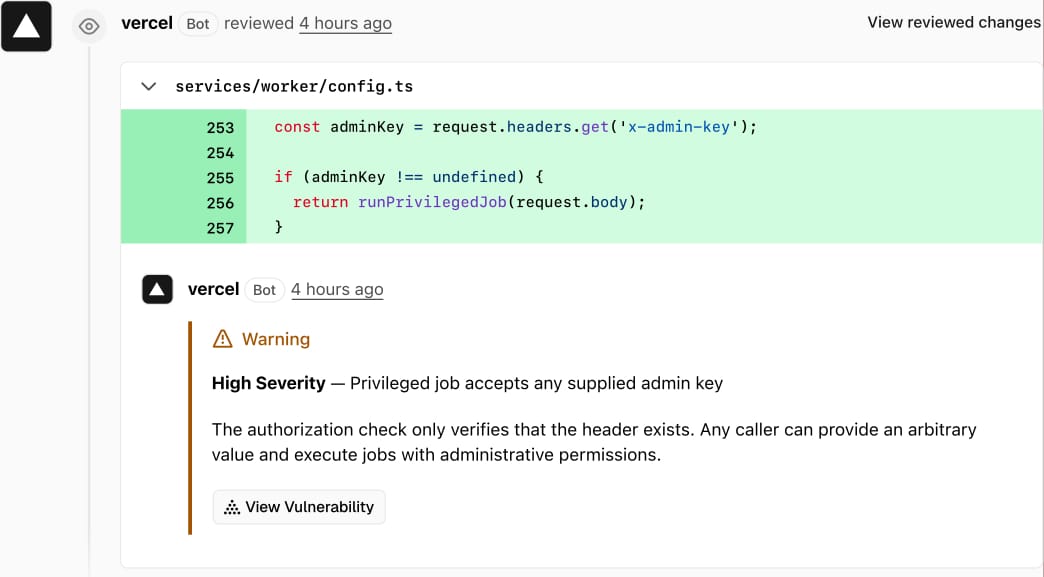
Additionally, the company has launched a Security Review feature in public beta for Pro and Enterprise users. The Vercel Agent automatically scans code every time it is pushed to GitHub, searching for authentication flaws or accidentally exposed secret keys. The system can independently suggest fixes, significantly reducing the risk of human error.
Why This Matters
Vercel was the target of a security incident last year when attackers gained access to an employee’s Google Workspace account, subsequently accessing internal systems and environment variables. Such cyberattacks are becoming increasingly frequent, particularly on developer platforms where access to code and servers is critical.
For developers who use Vercel to host web applications, these updates provide additional peace of mind. While hacking groups constantly seek ways to steal developer sessions, device-bound authentication renders these types of attacks practically useless. Users are encouraged to monitor platform updates and ensure their browsers and environments are protected by these modern standards.