TOI-561 b: A Cosmic Hellscape Where a Year Lasts 11 Hours

A New Discovery in the Depths of Space
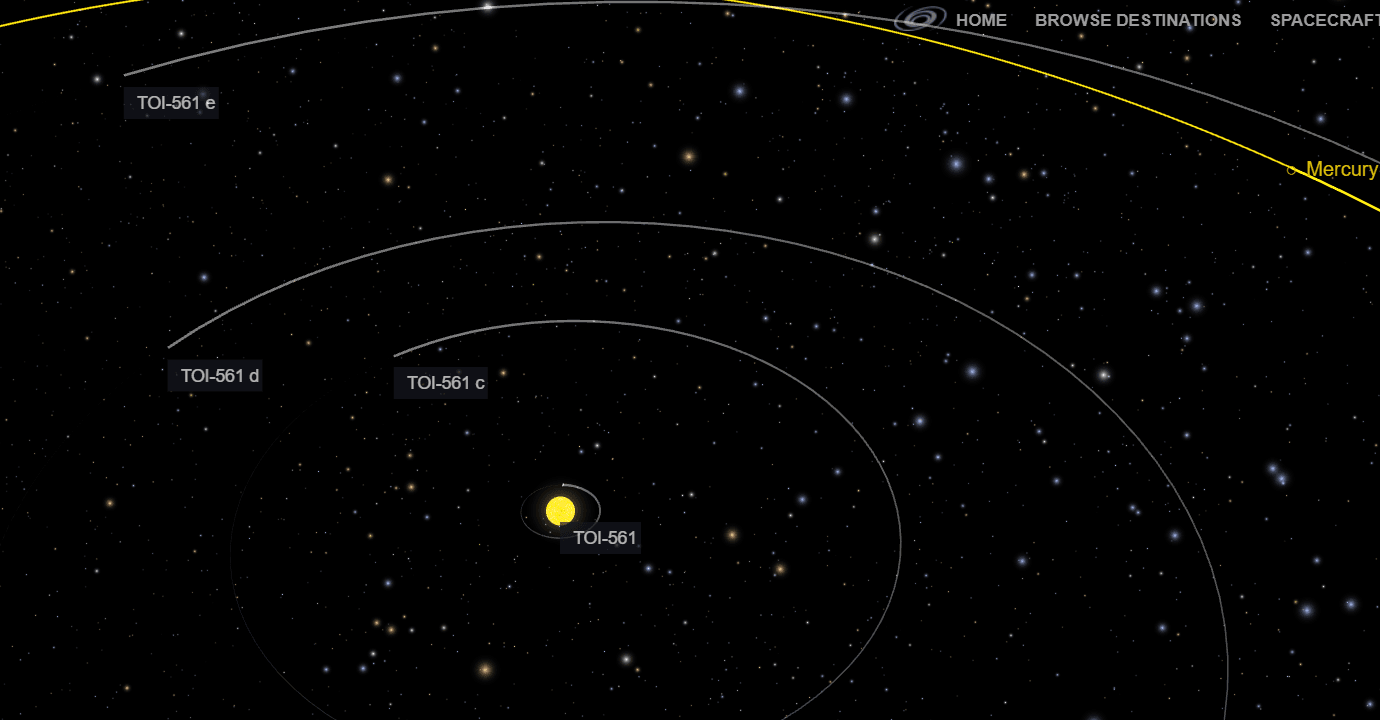
Astronomers have used the James Webb Space Telescope (JWST) to study the exoplanet TOI-561 b, located approximately 280 light-years from Earth. This "super-Earth" orbits its star so closely that it completes a full revolution in just 11 hours. Consequently, a "year" on this planet passes faster than a single day on Earth.
Hellish Conditions and Silicate Clouds
Surface temperatures on TOI-561 b exceed 1,800 degrees Celsius. Due to such extreme heat, scientists initially assumed the planet would lack an atmosphere entirely. However, following 37 hours of observation, researchers discovered that the planet is covered in clouds of vaporised silicate minerals. These substances belong to the same family as quartz and sand, which assist the planet in reflecting sunlight.
The planet is "tidally locked," meaning it always faces its star with the same side. As a result, one side experiences perpetual scorching daylight, while the other remains in eternal night. According to the study's authors, the planet reflects approximately 75% of the light that hits it, making it one of the most reflective objects in the universe, comparable to Venus.
What Lies Beyond the Atmosphere?
Researchers are currently working to determine the composition of this strange atmosphere. One theory suggests it could be a dense layer of carbon dioxide similar to Venus, or a blanket of sulphur dioxide similar to Jupiter's moon, Io, which would indicate active volcanism on the planet.
"The next big question we are seeking to answer is how a planet with such high temperatures manages to retain an atmosphere for billions of years," the researchers stated. Future observations with the James Webb telescope are expected to provide a better understanding of the chemical composition and evolutionary history of this cosmic hellscape. This discovery once again confirms that the universe is full of environmental conditions that lie beyond our imagination.