Tiny Corp Unveils $30,000 AI Workstation for Desktop Use
The tinybox Red Kimi promises to bring massive AI model performance to the desktop.
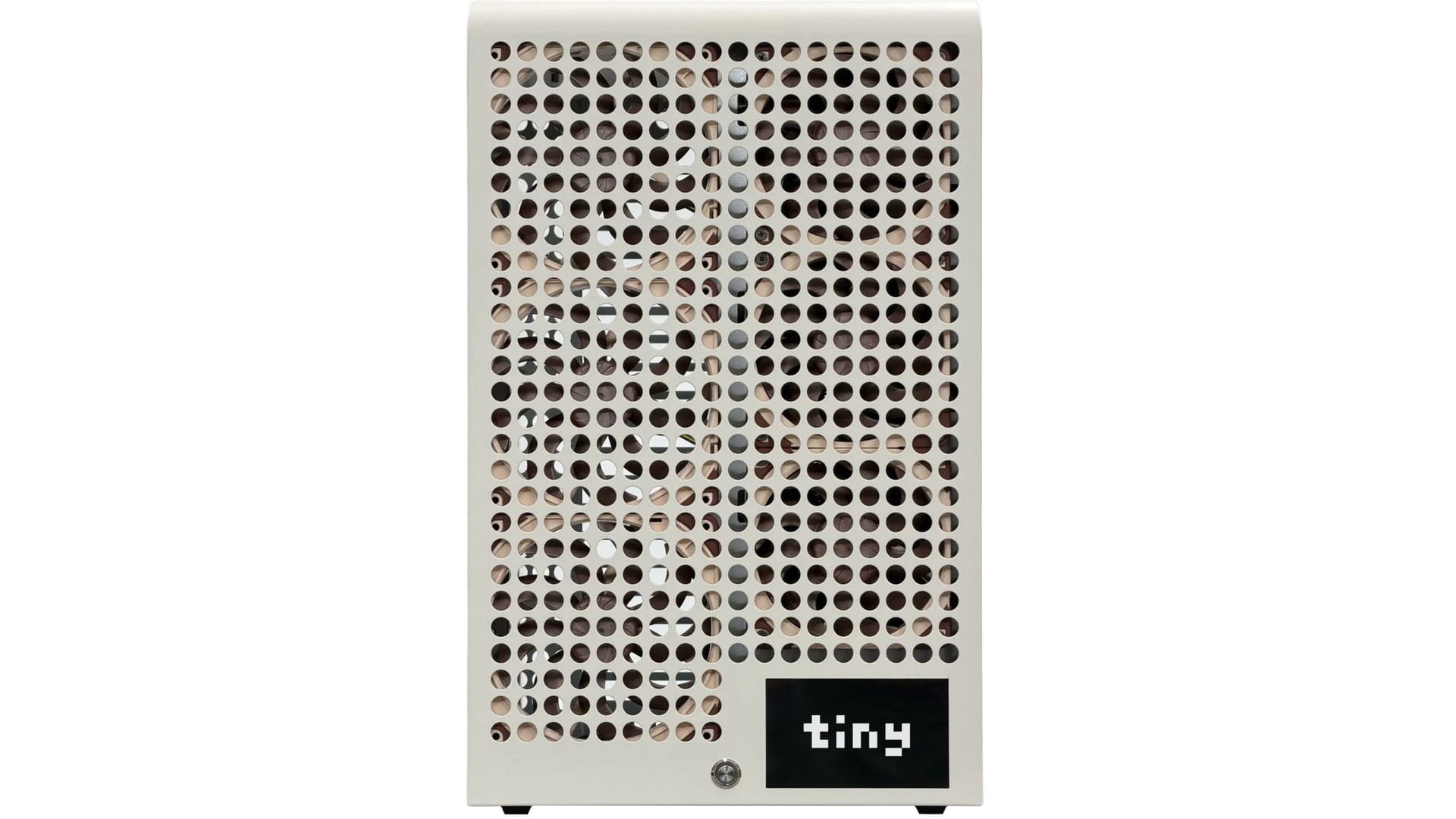
Immense Power in a Compact Chassis
Tiny Corp has officially unveiled its latest project, the tinybox Red Kimi. The system is designed to run large-scale AI models—specifically Moonshot AI’s 2.8-trillion parameter Kimi K3—not in a data centre, but on a standard desktop. Priced at $30,000, it stands as one of the most expensive desktop solutions currently on the market.
The system features four AMD Radeon AI Pro R9700 graphics cards, providing a total of 128 GB of GDDR6 memory. Computational power is handled by a 32-core AMD Epyc Genoa processor. However, the machine’s primary innovation lies in its storage system: it incorporates 16 individual 1 TB NVMe SSDs configured in a RAID array. Powered by Tiny Corp’s custom tinygrad driver, the graphics cards can access the database directly, bypassing the CPU to achieve unprecedented data transfer speeds.
Technical Challenges and Promised Performance
According to the company, the tinybox Red Kimi can run the Kimi K3 model at a speed of 40 tokens per second. Experts note that this figure is highly ambitious. Because the model's weight significantly exceeds the capacity of the graphics card memory, the system must constantly read data from the SSDs. Tiny Corp’s approach relies on the fact that flash memory is significantly cheaper than DRAM, though utilizing it for AI operations carries inherent risks.
The system weighs approximately 25 kilograms, and its powerful cooling fans generate noise levels reaching 60 decibels. While the configuration is theoretically attractive, independent testing has yet to be conducted. Consequently, the promised 40 tokens per second remains an optimistic projection from the manufacturer.
Competition and Market Outlook
While the $30,000 price tag may seem excessive to many, it remains competitive within the current market. For instance, an Apple Mac Studio with an M5 Ultra processor and 512 GB of RAM sells for a similar price, yet it cannot fully run the Kimi K3 model. Meanwhile, Nvidia’s solutions, such as the DGX Station, are significantly more expensive and still struggle to meet the requirements of models of this scale.
Tiny Corp’s initiative represents a significant step for researchers and developers who need to work with 'frontier' models from their own offices. However, users should be aware that this is experimental hardware, and its true efficiency will only be determined through practical application. For the technology sector in Georgia, such high-end workstations remain a niche product; however, given the rapid pace of AI development, demand for systems with this level of power may increase in the future.