Tim Sweeney: Valve’s Policies Are Stifling the Gaming Industry
The Epic Games boss claims Valve traps developers in a restrictive ecosystem.
The Debate Over Digital Distribution
Epic Games CEO Tim Sweeney has made another provocative statement regarding the gaming industry. He claims that Valve’s digital storefront, Steam, has been hindering industry progress for years. His criticism focuses specifically on the Steamworks platform, which Sweeney argues traps developers in a "walled garden" and prevents free communication between various platforms.
The discussion began on social media after former Epic Games employee Kiaran Ritchie criticized the 30% commission fee imposed by Steam. According to Ritchie, given modern technological capabilities, creating an alternative to Steam is relatively straightforward, and the industry requires a platform that allows developers to retain more of their revenue.
The Problematic "Social Wall"
Sweeney echoed Ritchie’s sentiments, emphasizing that Steamworks tools force developers to rely exclusively on Valve’s social services. Consequently, players across different platforms—whether Xbox, PlayStation, Nintendo, or mobile devices—are unable to easily connect with one another outside of the Steam environment.
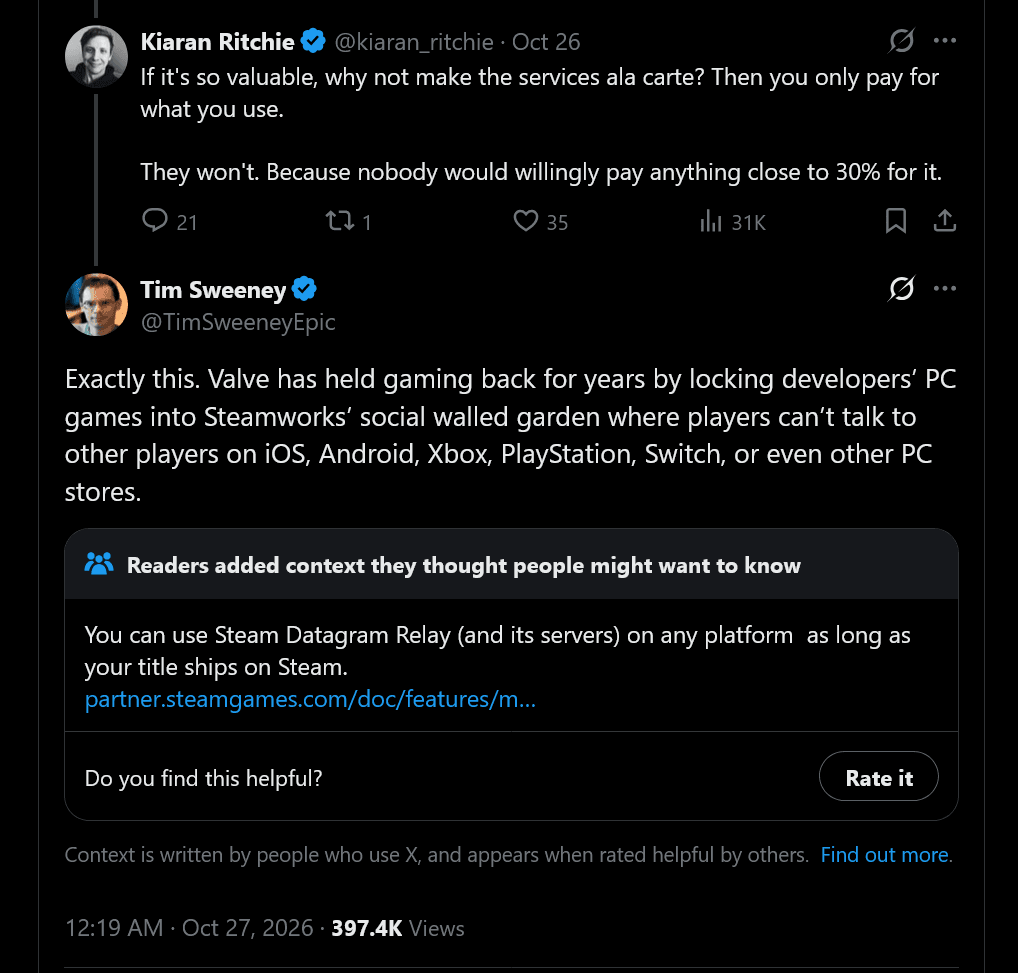
While some critics point out that using Steamworks services is voluntary, Sweeney maintains that developers have no real choice. He argues that the infrastructure created by Valve is so dominant that releasing a game while bypassing it is commercially unviable. In contrast, Epic Games offers Epic Online Services, which is open and functions across any platform.
Why This Matters
Steam’s dominance in PC gaming is undeniable. Despite persistent developer dissatisfaction regarding the 30% fee, the platform remains the primary hub for millions of players. While Sweeney’s criticism is aimed at increasing competition, it raises a question: is this a genuine concern for the industry, or merely an attempt to strengthen his own platform’s position?
For developers in Georgia, where Steam is a popular platform, such changes could prove beneficial if more accessible alternatives emerge in the market. However, as long as Valve’s network effect and player loyalty remain strong, "liberating" the industry from the Steam ecosystem remains a significant challenge.