The Evolution of Foldable Smartphones: From Royole FlexPai to iPhone Duo
From early experiments to the mainstream market
The Difficult Start of Foldable Technology
For years, the tech world anticipated the mass adoption of foldable smartphones. Yet, like any revolutionary innovation, the path has been arduous. While the first mobile phones in 1984 were the size of bricks and astronomically expensive, initial foldable devices were more compact but technically flawed. Early attempts, such as the 2019 Royole FlexPai, showcased the potential of flexible OLED screens, but the device itself was clunky and impractical.
The story of Samsung’s first Galaxy Fold became a vital lesson for the industry. In 2019, users and critics discovered that the screens on the $2,000 device were fragile. This period forced manufacturers to realize that success relied not just on design, but on the durability of hinges and screen resilience.
Progress and Technical Breakthroughs
Between 2020 and 2025, Android manufacturers engaged in intensive development. Samsung introduced Ultra-Thin Glass, and later models gained IPX8 water resistance and dust protection. Google’s Pixel 10 Pro Fold further advanced this by providing full IP68 protection.
Oppo also made significant contributions, nearly eliminating the screen crease issue in 2021 with its Find N model. Simultaneously, devices like the Motorola Razr brought prices down to more accessible levels, turning foldables into genuine competitors to standard flagship phones.
iPhone Duo: A New Era or Just a Continuation?
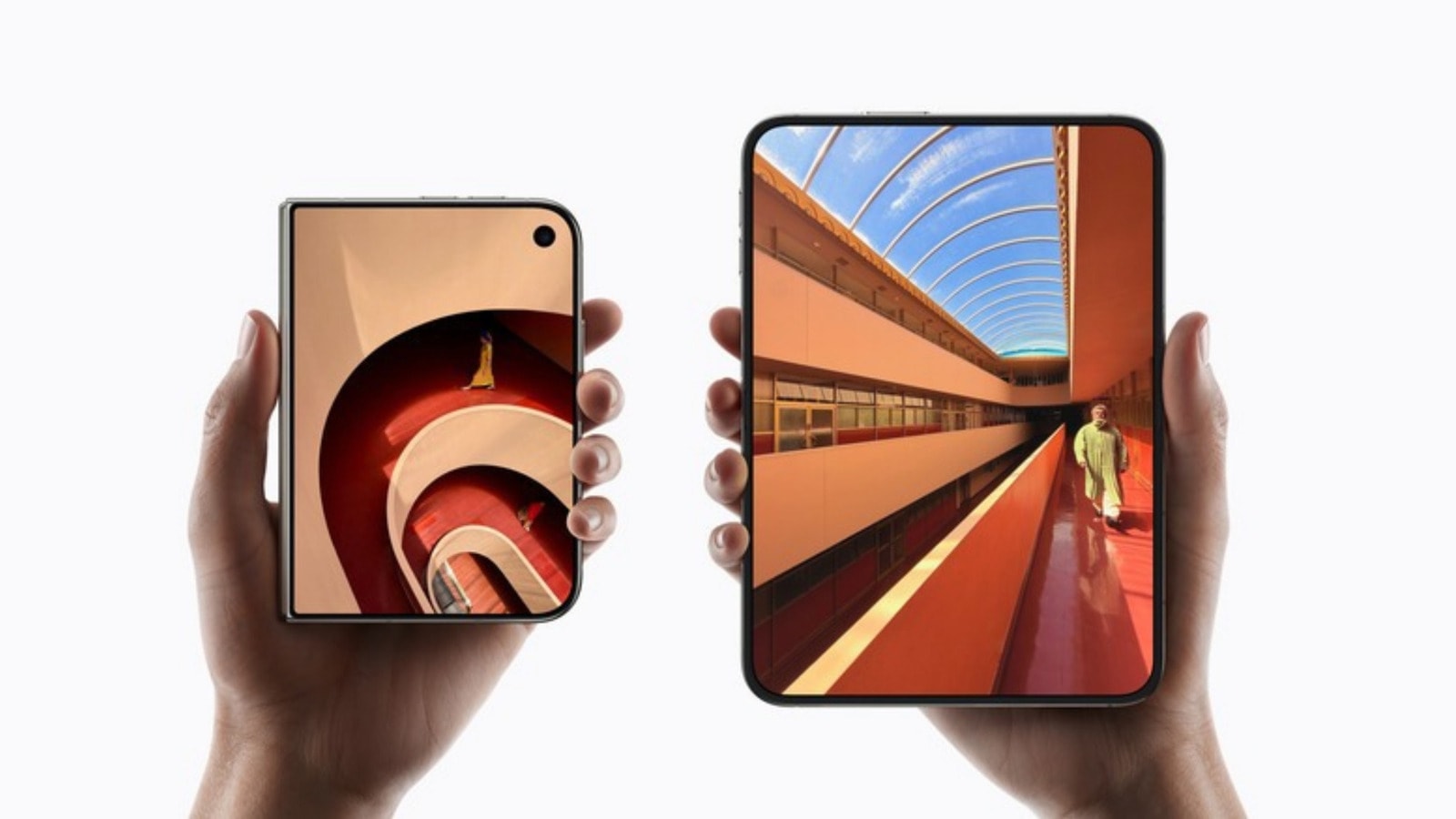
It is characteristic of Apple to join a technological trend only after the initial “teething problems” have been resolved. The 2026 iPhone Duo is a clear testament to this strategy. Starting at $1,999, the device offers a 7.6-inch internal screen and a 5.4-inch external display.
Experts consider the iPhone Duo the most interesting Apple device of the last decade. Forecasts suggest that as many as 6 million units could be sold in 2026 alone. Given Apple’s history, this model could be the turning point that finally makes foldable smartphones a mainstream product. For users in Georgia, this means that in the near future, foldable smartphones will transition from exotic novelties into standard choices for daily use.