Tesla Roadster and the Fan Secret: Innovation or History Repeating?
Defying Gravity: How the Roadster System Works
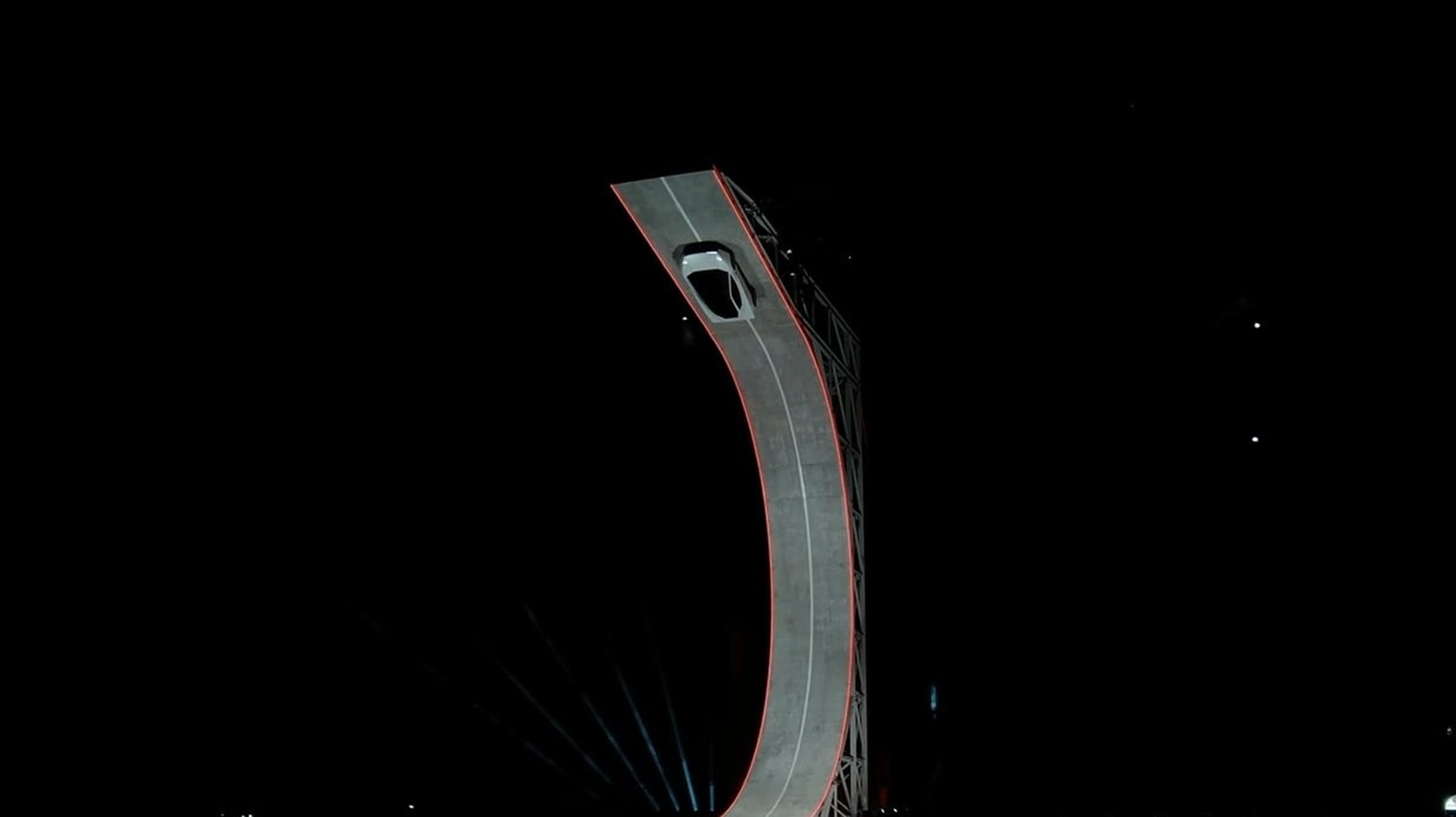
The new generation Tesla Roadster has stunned the public with an impressive demonstration. A video shows the car driving up a C-shaped ramp, stopping in a vertical position, and effectively 'clinging' to the surface before descending safely. According to the company, this is made possible by special multi-mode fans and a ground-sealing system that functions as a downforce generator.
The system pulls air from beneath the vehicle, creating a vacuum effect that holds the car firmly against any surface, regardless of speed. Tesla claims this mechanism, combined with a rear deployable spoiler, generates up to 2g of downforce, allowing the car to perform maneuvers that defy the laws of physics.
Historical Roots: Chaparral 2J and Brabham BT46
Although Tesla's technology is impressive, using fans to increase downforce is not a new concept. Back in 1970, American racers Jim Hall and Hap Sharp created the Chaparral 2J, a car that visually resembled a box. It was equipped with two fans adapted from a military tank engine and used polycarbonate 'skirts' to create a sealed space. This system could generate between 1.25g and 1.5g of downforce.
Another iconic example is the 1978 Formula 1 car, the Brabham BT46, known as the 'fan car.' Designer Gordon Murray officially installed the fan to cool the engine, but it was actually used to suck out air and increase downforce. The car won the Swedish Grand Prix immediately upon its debut, after which such technologies were strictly restricted in racing series.
Modern Competition and the Future
Following Tesla's announcement, British manufacturer McMurtry Automotive ironically welcomed the company to the 'club' on social media. Their electric supercar, the Spéirling, has already proven it can remain stationary while upside down. Production of the Spéirling Pure, introduced in July 2026, is limited to 100 units, with prices starting at $132,300.
As for Tesla, series production of the Roadster is planned for 2028. Customers can already place reservations: the deposit for the base model is $50,000, while the 'Thrust' version, equipped with the fan system and additional thrusters, requires a $250,000 deposit.
For automotive enthusiasts, this technology remains an exclusive and expensive segment for now. However, the introduction of such systems into mass production suggests that the electric vehicles of the future will not only be environmentally friendly but will also possess the ability to 'play' with the laws of physics.