Tesla Roadster 2: The Flying Sports Car Is Now a Reality
The long-awaited electric supercar, capable of flight, is set to hit production lines in 2028.
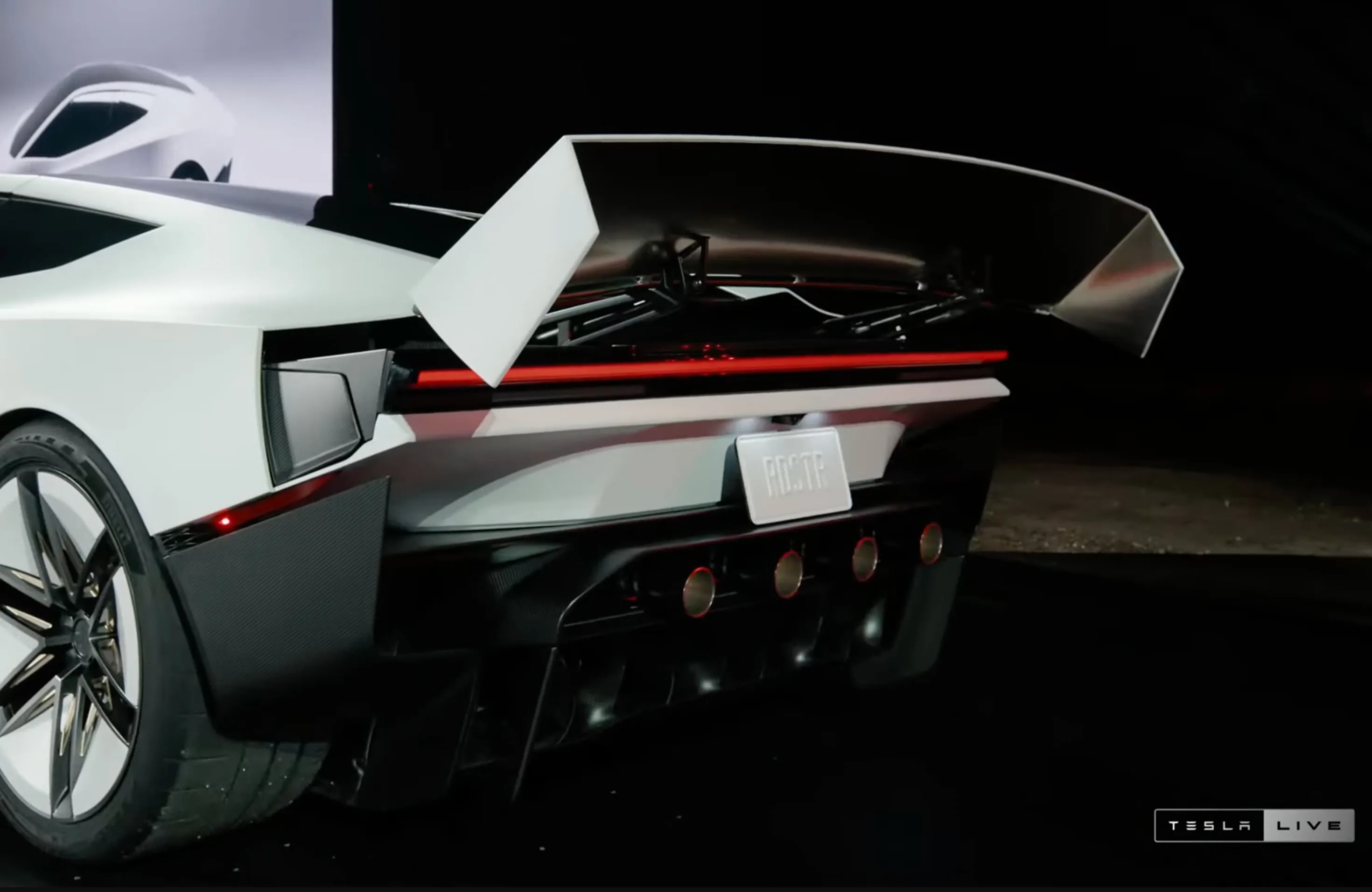
At a special event held at the SpaceX test site in Texas, Tesla officially unveiled its latest project, the Roadster 2. Rumoured and promised since 2017, the car is set to become the first production model in history to feature flight capabilities. During the presentation, the car successfully lifted off the ground, flying several metres above the company’s electric trucks.
Technology and Capabilities
The standout feature of the Roadster 2 is its four compressed-gas thrusters. According to Lars Moravy, Tesla’s head of vehicle engineering, this system allows the car not only to take flight but also to manoeuvre through corners at high speeds. Elon Musk claims this technology will enable the car to break all existing racing records. Tesla data indicates the sports car will accelerate from 0 to 100 km/h in just one second.
Regarding top speed, the initial target is 370 km/h, though Musk plans to increase this figure to 620 km/h. Interestingly, the vehicle has a range of approximately 480 kilometres on a single charge, which is an average figure compared to modern luxury electric vehicles.
Models and Production Plans
Tesla has announced three variants of the Roadster 2:
- Performance: A standard two-seater version without thrusters.
- Thrust: A limited-edition racing version.
- Rocket: A single-seat version available by invitation only.
Although the car’s debut was originally planned for 2020, production has been pushed back to 2028. Official pricing has not yet been released, but customers must pay a $50,000 deposit to secure a pre-order.
Market Challenges
The unveiling of the Roadster 2 comes at a time when the global automotive industry’s attitude toward electric vehicles is shifting. Reduced state support in the US and a renewed interest in internal combustion engines among wealthy consumers have made the luxury EV market increasingly difficult. Some European manufacturers have even abandoned their electric vehicle development plans.
For Tesla, this model may be the last vehicle designed for manual human control. The company is currently focusing on autonomous driving systems and robotics. While it is unlikely that such hypercars will be seen in Georgia in the near future, the technological solutions introduced in the Roadster 2 are expected to eventually influence Tesla’s mass-market models.