Student Builds Record-Breaking Jet Drone in Dorm Room
Thomas Salvo is aiming to claim an $800,000 prize by breaking the sound barrier with his custom-built aircraft.
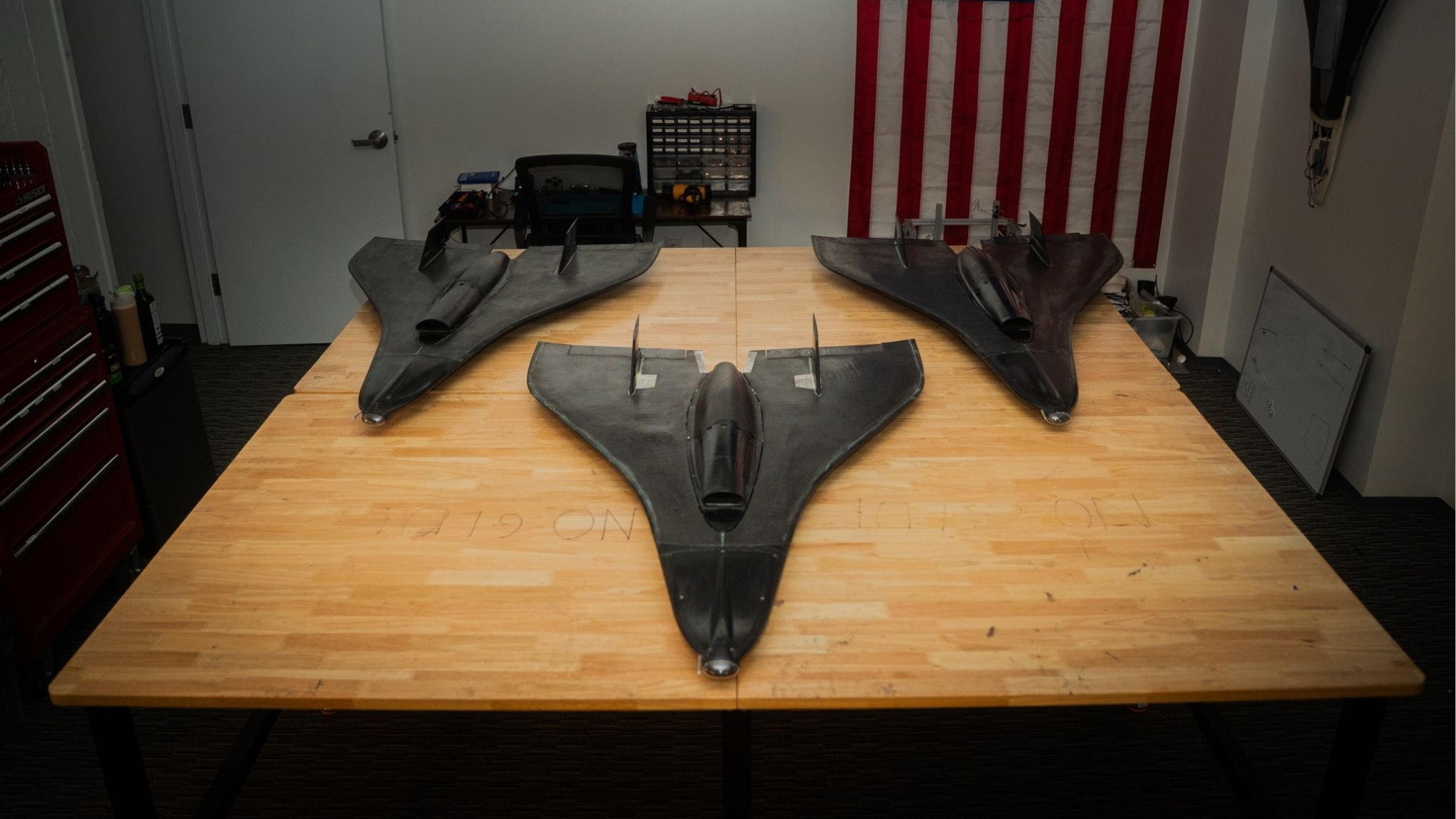
From Student Project to World Record
Thomas Salvo, an aerospace engineering student, has made waves in the technology sector. His drone, dubbed the Reaper, has unofficially set a world record for jet-powered drones by reaching a speed of 790 km/h (491 mph). Perhaps most impressively, the student engineered this complex aircraft entirely within his dormitory room.
The Reaper’s design is highly sophisticated, featuring a custom carbon-fibre fuselage, a laser-cut internal structure, and a 250N jet engine. Salvo replaced the engine's standard nozzle with a 3D-printed titanium component, which significantly improved the aircraft's centre of gravity. The total cost of the project was $13,000.
What is the Boom Prize and Why Does It Matter?
The project aims to secure the $800,000 Boom Prize, established by Blake Scholl, CEO of Boom Supersonic. The requirements for the award are rigorous: the aircraft must break the sound barrier (Mach 1) for at least five seconds, must be jet-powered, and must be capable of a safe landing. Furthermore, the same aircraft must complete two flights within a single day.
A key condition of the competition is that participants must be independent hobbyists rather than large corporations or venture-backed teams. While Thomas Salvo’s project is currently the frontrunner, he still has work to do, as no similar drone has yet managed to break the sound barrier, which is approximately 1,235 km/h.
Technical Capabilities and Future Prospects
The Reaper’s performance is remarkable: it can climb to an altitude of 2,000 metres in under 20 seconds while carrying a 1.2 kg payload, and it can cover 50 kilometres at maximum speed. With a full fuel tank, the drone can maintain this velocity for four minutes. Salvo states that the system is already reliable and plans to exceed 800 km/h with minor optimisations.
Although the project currently faces little competition, other players exist in the field, such as the Mach Initiative team, though their eligibility remains in question due to the prize rules. Thomas Salvo’s success clearly demonstrates that by combining modern technology, 3D printing, and engineering expertise, individual inventors can now achieve results that were previously the exclusive domain of state and military laboratories.