Spanish Firm PLD Space Begins Testing of Miura 5 Orbital Rocket
The company is targeting a maiden flight for 2027 as it scales up production and infrastructure.
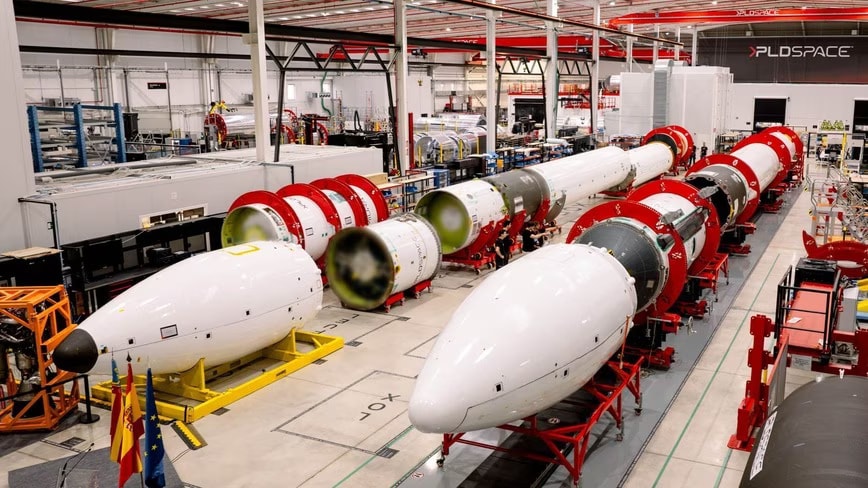
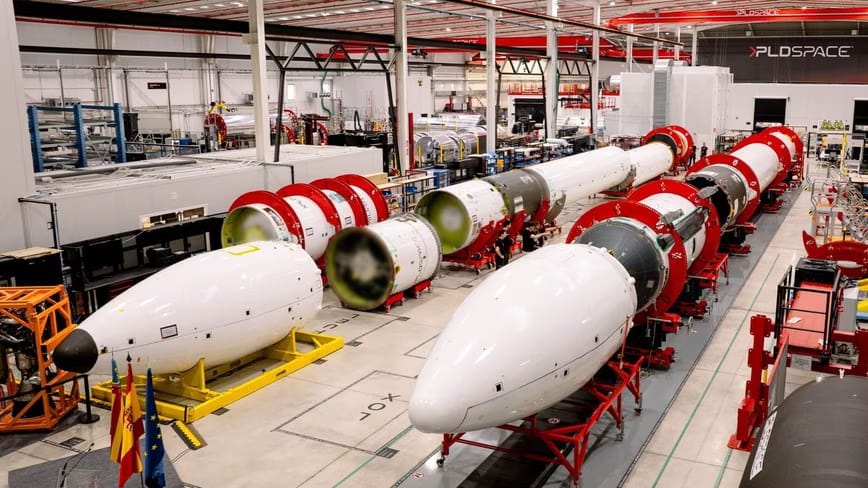
Spanish aerospace firm PLD Space has officially confirmed that the system testing phase for its orbital rocket, Miura 5, is now underway. The company reports that it has already assembled three units of the rocket, allowing engineers to work in parallel on both test and flight-ready models. This strategy is designed to accelerate the development process, enabling test data to be immediately applied to flight hardware.
Testing Process and Technical Readiness
Currently, the second stage of the rocket has been fully assembled at the company’s testing site in Teruel, Spain. The structure, which integrates avionics, fuel systems, control units, and the engine, is now in a vertical position and ready for critical evaluations. A "wet dress rehearsal" is scheduled for the near future, involving a launch countdown using actual fuel, followed by a static fire test to ignite the engine while the vehicle remains fixed.
Company leadership states that these procedures are vital for the first demonstration flight of the Miura 5, which is pencilled in for the first half of 2027. Furthermore, tests for the stage separation mechanism and the rocket's fairing have already been successfully completed.
Production and Infrastructure Expansion
PLD Space has invested significantly in expanding its production capabilities. The company operates a 17,000-square-metre manufacturing facility in Elche, while its Teruel base features ten distinct testing stands. The scale of production is evidenced by the completion of seven full engines and 13 fuel tanks. According to company data, the flight electronics required for four complete rockets are already prepared.
Simultaneously, work is progressing at the Guiana Space Centre in Kourou, French Guiana, where the Miura 5 is set to launch. Approximately 60 containers of ground support equipment have already been transported to the site, and the company is working closely with the French space agency (CNES) to refine safety protocols.
Why This Matters
The PLD Space project holds strategic importance for the European space industry. The company has secured support from the European Space Agency (ESA) under the "European Launch Vehicle Challenge" and has raised 288 million euros in investment. This initiative builds on the success of the October 2023 suborbital launch, which saw the company’s first rocket, the Miura 1, reach space.
While the Miura 5 launch remains on the horizon, the company's strategy of parallel production and testing highlights the ambitions of the European private space sector to become an independent and competitive player in the global orbital launch market.