Sipeed’s New AI Mini PC Challenges Nvidia
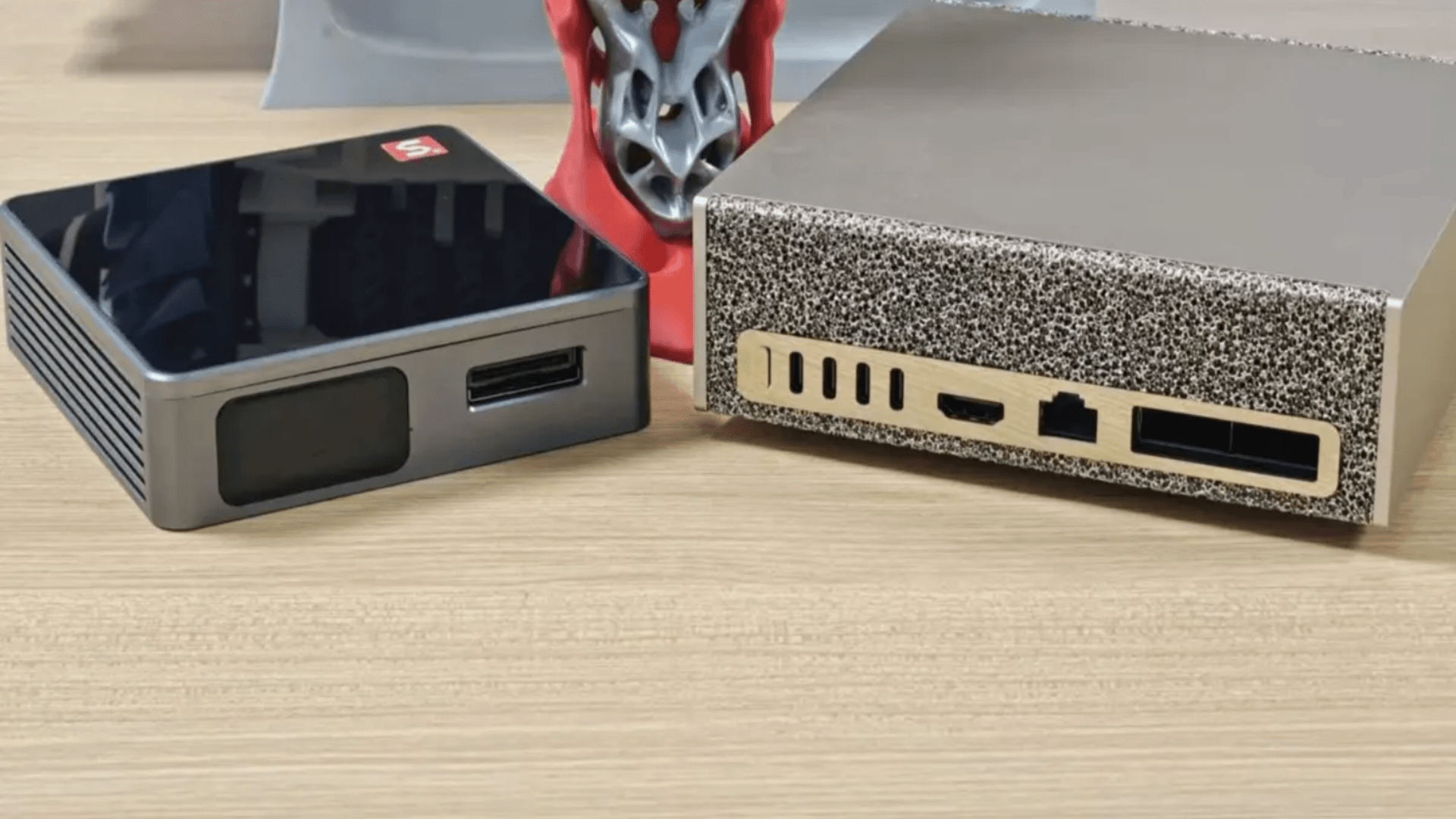
A new player has entered the artificial intelligence hardware market. Chinese manufacturer Sipeed has announced its new mini PC, the MaixStation, which the company claims outperforms Nvidia’s DGX Spark in specialized AI workloads. While the device features more modest technical specifications, it offers practical efficiency that challenges expensive alternatives currently on the market.
Technical Specifications and Efficiency
At the heart of the MaixStation is the AX8860P processor, developed by Axera. This 6nm chip integrates 16 Arm Cortex-A55 cores and an AI accelerator capable of 256 TOPS (trillion operations per second). The device requires only 40 watts of power, which is impressive given its performance capabilities.
Sipeed representatives note that Nvidia’s 1,000 TOPS figure is often based on theoretical, sparse FP4 calculations, which do not always translate to real-world processing speeds. The company argues that its architecture allocates resources more efficiently, a benefit that becomes particularly evident when processing Large Language Models.
Price and Availability
One of the MaixStation’s primary advantages is its price. According to Sipeed, the model with 32GB of RAM will cost less than $2,000, while the 128GB version will be priced around $4,000. For comparison, the Nvidia DGX Spark is priced at approximately $6,950. The company plans to launch a crowdfunding campaign on Kickstarter in the coming months.
The company also highlights scalability: multiple MaixStations can be connected via AXLink technology, allowing the system to handle large-scale models such as DeepSeek V4.1-Flash 552B. The device supports popular software environments, including PyTorch, ONNX, and vLLM, making it an attractive option for developers.
What This Means for Users
Despite Sipeed’s optimistic claims, the industry remains cautious regarding such comparisons. Independent testing is still required to determine how the system performs across various tasks. However, it is clear that the market for compact and energy-efficient AI solutions is evolving rapidly.
For users and developers in Georgia, this news is significant as the reduced cost and miniaturisation of AI infrastructure make local AI deployment more accessible. If Sipeed’s project is successful, it could represent a major step toward the democratisation of high-performance AI computing.