Prima: The Revolutionary Implant Restoring Vision
Age-related macular degeneration (AMD) is a widespread condition affecting more than 5 million people globally. The disease causes a deterioration of the central part of the retina, leaving patients unable to read, recognise faces, or perform daily tasks. While this condition was long considered irreversible, the Prima system, developed by the California-based company Science Corporation, may herald a new era in medicine.
How the Prima system works
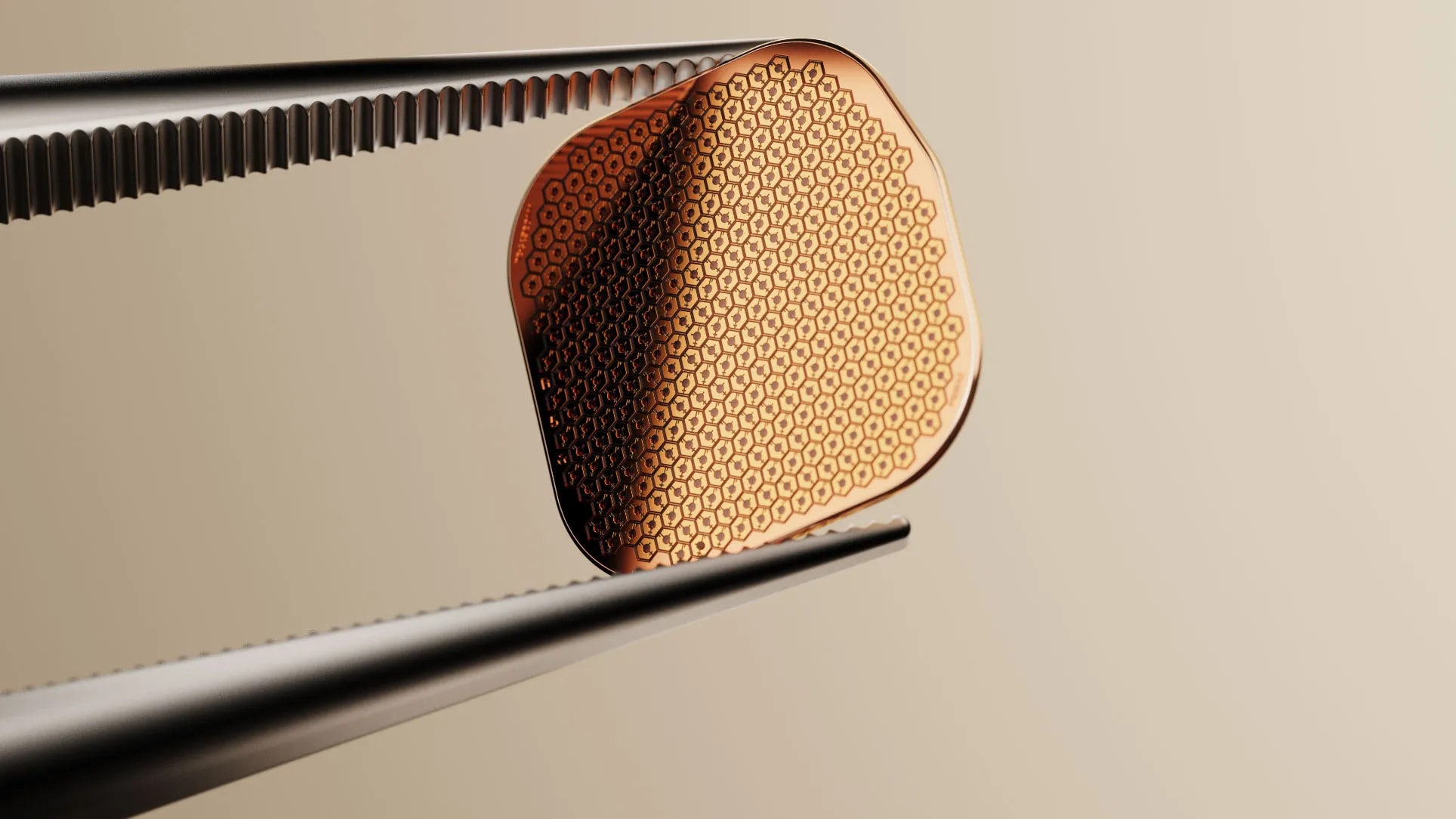
The human retina processes light through three layers. Photoreceptors convert light into electrical signals, bipolar cells process these signals, and ganglion cells transmit them to the optic nerve and the brain. In macular degeneration, only the photoreceptors are damaged, while the rest of the neural network remains functional. The Prima implant replaces these damaged photoreceptors. The system consists of special glasses equipped with a miniature camera that captures real-time images. A processor converts this video into infrared signals, which are then transmitted via a laser projector in the glasses directly to the implant located at the back of the eye. The implant, consisting of 378 pixels, converts the light into electrical impulses and delivers them to the healthy bipolar cells, which then relay the information to the brain.
Battery-free technology
Notably, the Prima implant does not require an external power source or battery. Photovoltaic elements on the chip simultaneously perform the functions of light conversion and energy harvesting, making the device extremely compact. Patients can independently adjust image contrast, brightness, and magnification using a portable processor. Clinical trial results are highly promising: after appropriate training, more than 80% of patients were able to read, solve crosswords, and use smartphones. This result is unprecedented in the field of vision restoration.
Future prospects
The Prima system received European certification this July, enabling its implementation in medical practice. The company is currently awaiting approval from the U.S. Food and Drug Administration (FDA). Although the technology is still evolving, it offers hope that visually impaired individuals can regain their independence. Given the rising statistics of vision problems worldwide, such innovative approaches may become the standard in ophthalmology in the coming years. For patients in Georgia, this means that medical technology is increasingly approaching the threshold where previously incurable diseases become manageable.