New VOLTA Malware Uses AI to Evaluate Victim Assets
The new malware uses AI to profile victims and assess the profitability of cyberattacks.

Cybersecurity experts have identified a new Windows malware known as VOLTA-AUTODOXER that integrates artificial intelligence into its operations. Beyond simply stealing data, the program analyzes the information to determine the victim's financial value to cybercriminals.
How VOLTA Works
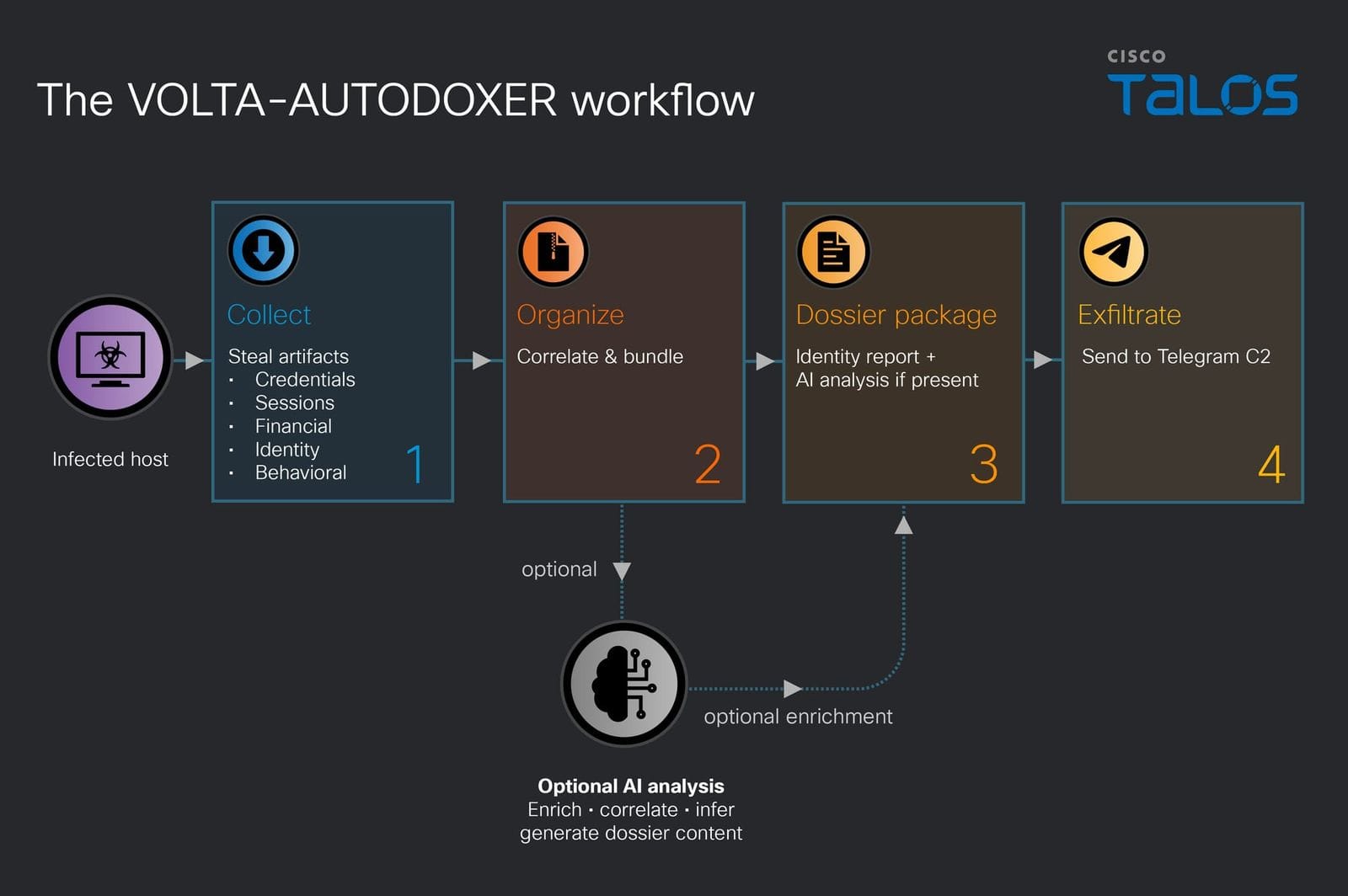
Once it infiltrates a computer, the program begins an extensive data harvest. It extracts passwords saved in browsers, cookies, bank card details, email profiles, Roblox accounts, and even Wi-Fi passwords. Additionally, the malicious code searches for cryptocurrency wallets and attempts to compromise them.
After collecting the data, VOLTA compiles an evidence package that includes the victim's geolocation, workplace details, document metadata, and partial payment card information. This is where artificial intelligence is deployed: the program sends this data to models such as Claude, Google’s Gemini, or Moonshot AI’s Kimi to generate a detailed report on the victim’s financial standing.
AI as an Analyst
The creators of VOLTA have configured the software so that the AI acts as a forensic intelligence analyst. The model is tasked with evaluating the victim's assets, their market value, and the individual's level of cybersecurity. If one model refuses the unethical request, the program automatically switches to another. The final report is sent to the cybercriminal via Telegram, after which the malware deletes itself to avoid leaving a trace.
Threat and Defense
This tool is likely intended for sale, meaning anyone can purchase a customized version for their own purposes. Experts note that VOLTA can bypass Chrome’s encryption to steal data, though certain defensive measures remain effective.
If you suspect your device has been infected, it is essential to change all passwords, revoke API keys, and transfer cryptocurrency wallets to a new, secure device. The emergence of VOLTA serves as further proof that cybercriminals are increasingly utilizing generative AI to streamline their illegal activities and execute more effective attacks.