Neanderthal Wooden Tool Stone Casts Discovered in Spain
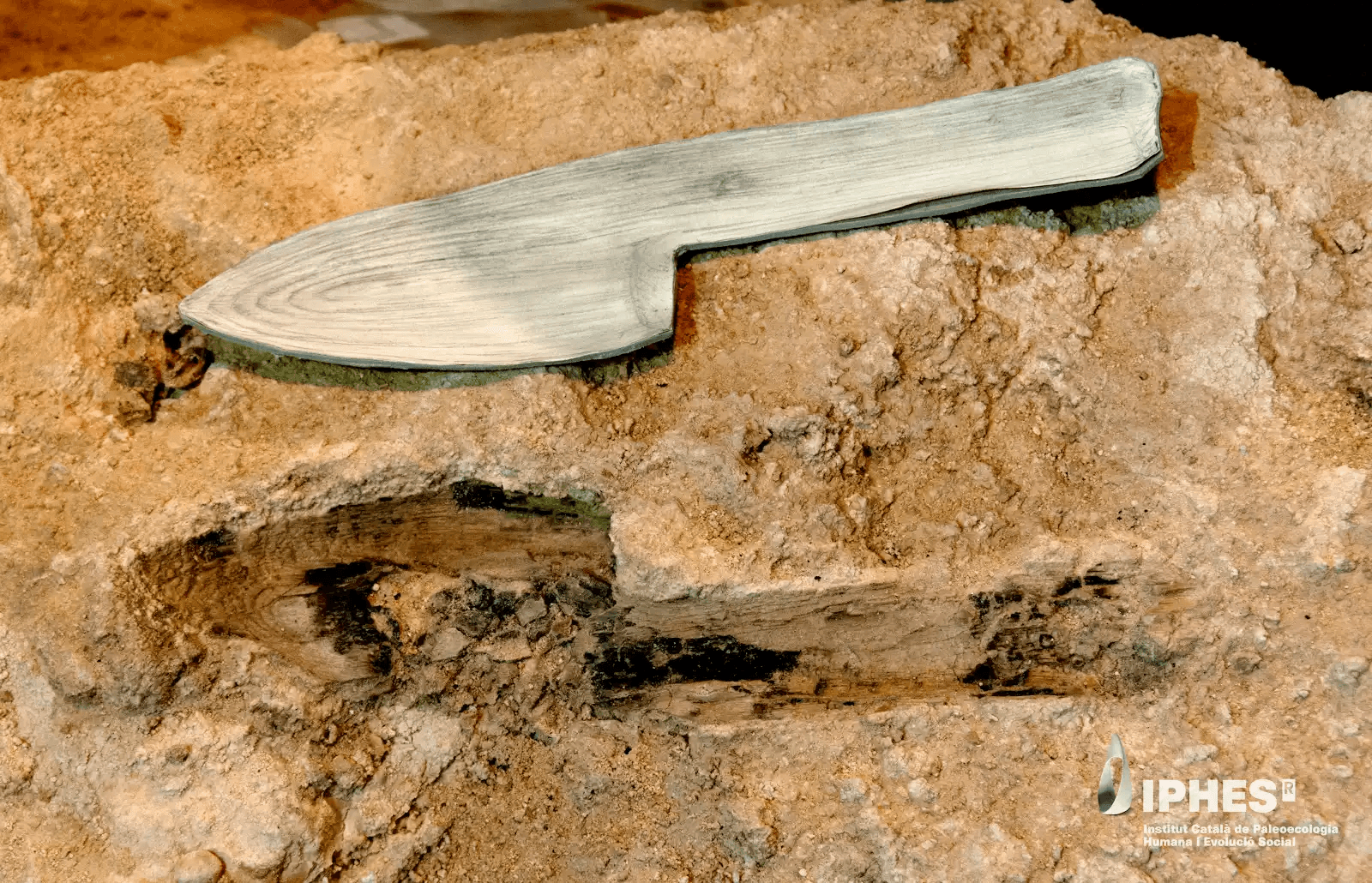
Spanish archaeologists at the Abric Romaní site west of Barcelona have discovered unique traces of wooden tools and household objects crafted by Neanderthals. According to research published in the scientific journal Science Advances, mineral-rich water encrusted the wooden items in a limestone-like shell. Over time, the wood decayed and rotted away, but the stone retained its exact shapes.
Researchers catalogued 597 casts of wooden items dated between 62,000 and 40,000 years ago. The finds include spears, digging sticks, trays made from tree bark, shelter components, and a heavy club with no known previous equivalent.
Unique technological achievement
The Stone Age takes its name from the tools that survived to the present day. However, early humans likely used wood most often, as it was far easier to work with. Due to the rapid decay of organic materials, information regarding Palaeolithic wooden items was previously extremely scarce.
The oldest wooden artefacts previously known were mostly weapons, such as spears found at Schöningen and Lehringen in Germany, and Clacton-on-Sea in the UK. These objects were mainly preserved in waterlogged sediments where a lack of oxygen slowed decomposition.
The discovery at Abric Romaní demonstrates once more that Neanderthals were far more advanced and resourceful than previously portrayed. They were capable of constructing complex structures and tools for varied purposes, pointing to a high intellectual and technological level distinct from Homo sapiens.