Miraculous Survival: Man Survives After Knife Penetrates Brain
A Unique Medical Case
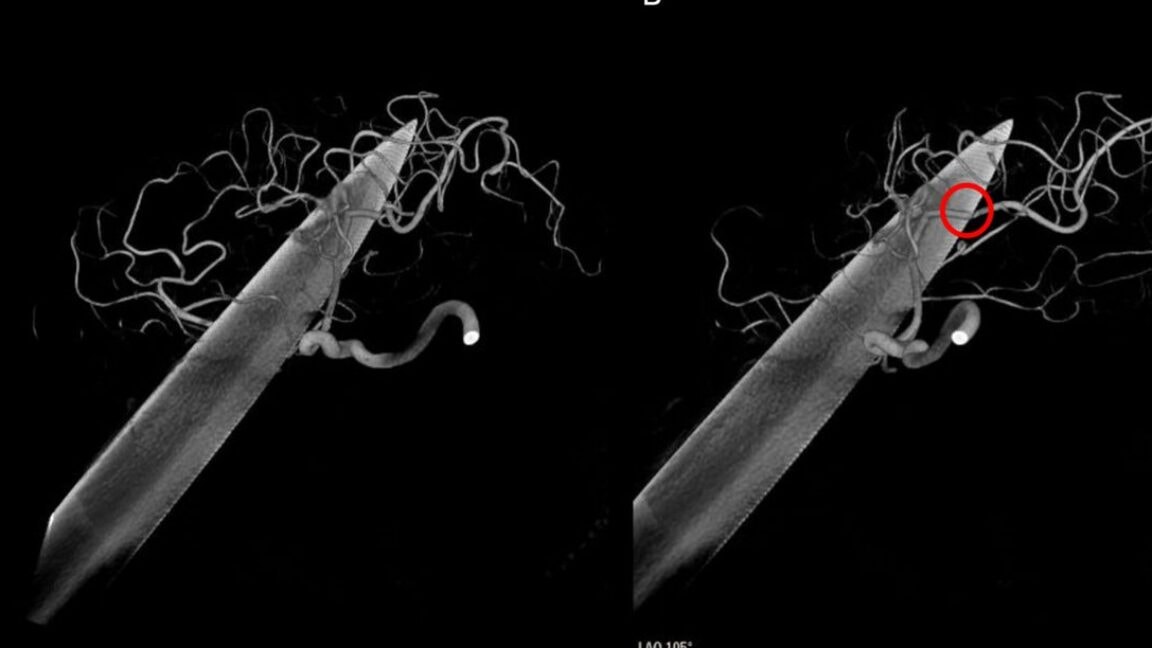
A British hospital recently documented a rare medical occurrence involving a man in his twenties who arrived with a knife handle protruding from his face. The 15-millimetre blade had travelled through his eye socket and brain, reaching the upper part of his skull. Despite the severity of the trauma, the patient remained conscious, able to speak, and capable of moving his limbs. According to the Glasgow Coma Scale, his condition was assessed as moderately severe, yet he remained responsive.
Surgical Intervention and Treatment
Fearing the patient might attempt to remove the knife himself due to potential confusion, doctors immediately sedated and intubated him. A CT scan revealed that the blade had passed through the left frontal and temporal lobes of the brain. Miraculously, it had avoided the corpus callosum—which connects the two hemispheres—and the internal carotid artery. Surgeons opted for a careful extraction method, which was completed without significant haemorrhaging. Unfortunately, the damaged eye could not be saved and required removal.
Recovery and Scientific Significance
Following the operation, the patient was moved to intensive care, where his condition improved rapidly. He was removed from the ventilator just one day later. Despite minor temporary weakness, which soon subsided, the patient showed no signs of infection or seizures. He was eventually discharged in a neurologically stable condition. Doctors stated that this case confirms that outcomes in such traumas depend more on the precise trajectory of the blade than the depth of the wound itself.
Cases like this, reminiscent of the famous 19th-century story of Phineas Gage, highlight the remarkable adaptive capacity of the human body. While the exact cause of the injury remains undetermined, doctors noted the patient had a history of depression. This case will remain in medical literature as evidence that even with severe penetrating brain injuries, proper surgical intervention can preserve both life and function.