Microsoft Sets Financial Record for the Tenth Consecutive Quarter
Record-breaking quarterly results driven by cloud infrastructure and AI
A Continuous Trend of Financial Growth
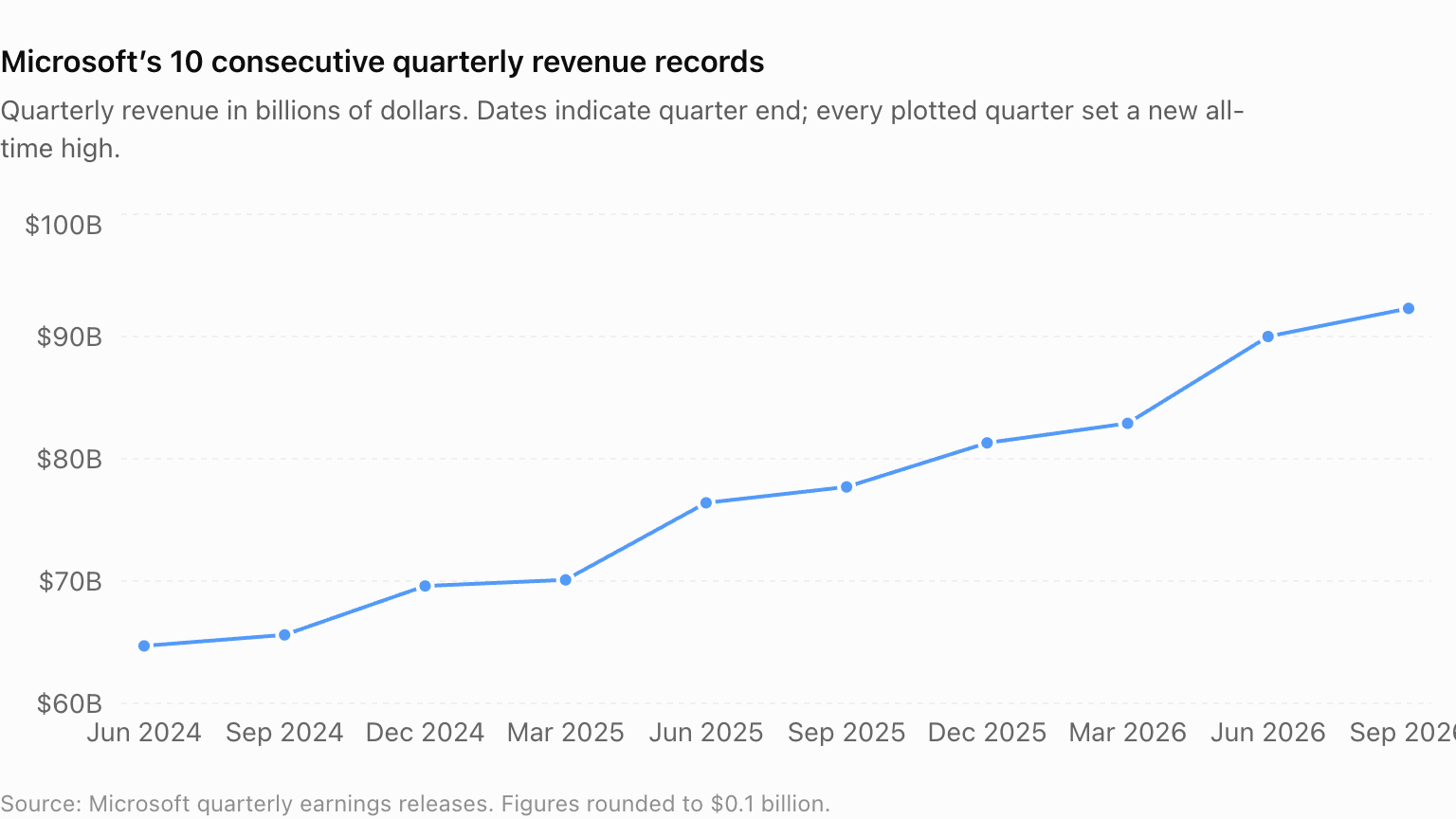
Microsoft has closed another financial quarter with record-breaking figures. The company reported revenue of $92.3 billion, marking a 19% increase compared to the same period last year. Notably, this is the tenth consecutive quarter in which the corporation has surpassed its own financial records. Net profit rose to $36.6 billion, representing a 32% increase.
The Role of Cloud Services and AI
The primary driver behind these impressive results is Microsoft Cloud. Revenue in this segment reached $63.9 billion, a 30% increase over the previous year. Within this division, Azure accounted for $33.2 billion, while Microsoft 365 generated an additional $28 billion.
Artificial intelligence is playing a decisive role in revenue growth. The partnership with OpenAI alone contributed $10 billion to the company’s earnings. Although OpenAI utilizes other platforms, a significant portion of their services remains dependent on Microsoft’s infrastructure. The company’s commercial commitments, linked to future contracts, grew by 73% to reach $677 billion.
Expenditures and Market Shifts
Despite high revenues, Microsoft is investing heavily in infrastructure development. Capital expenditures reached $45.2 billion, an all-time high. These funds are primarily directed toward expanding artificial intelligence capabilities and constructing data centres.
Simultaneously, shifts in the company’s structure are evident. Despite the success of cloud services, the consumer and devices segment saw a 3% decline. A 22% reduction in Windows OEM and hardware sales is particularly notable, indicating a change in market priorities.
What This Means for Georgia
Businesses and technology companies operating in Georgia that rely on Azure and Microsoft’s cloud infrastructure are directly connected to these results. The global investments Microsoft is making will ultimately reflect on the quality and accessibility of the services used by local customers. The company’s financial stability confirms that integrating artificial intelligence into traditional business models is not only a promising path but an already profitable strategy.