Margaret Hamilton: The Woman Who Made the Moon Landing Possible
The pioneer whose software saved the Apollo 11 mission from catastrophe.

The Path to Scientific Excellence
The world of computer science has lost a legendary figure. Margaret Hamilton, who passed away at the age of 90, played a fundamental role in humanity's journey to the Moon. Her career was defined by a constant battle against stereotypes; as a child, she refused to accept the societal limitations placed on girls, and later, she relentlessly shattered professional barriers in a male-dominated field.
When Hamilton joined the team at the Massachusetts Institute of Technology (MIT) in the mid-1960s, developing software for NASA's lunar program was considered a man's domain. However, Margaret not only secured her place but quickly rose to become the director of software engineering. Her approach to problem-solving was unique: she meticulously anticipated every possible error that could occur during space flight.
Apollo 11 and the Historic Decision
Hamilton's genius was most evident during the 1969 Apollo 11 mission. As Neil Armstrong and Buzz Aldrin prepared to land on the lunar surface, the onboard computer became overloaded and issued error signals. While mission control considered aborting the landing, the system designed by Hamilton correctly prioritized tasks and shut down unnecessary operations. As a result, the lunar module landed safely, and Hamilton's code secured its place in history.
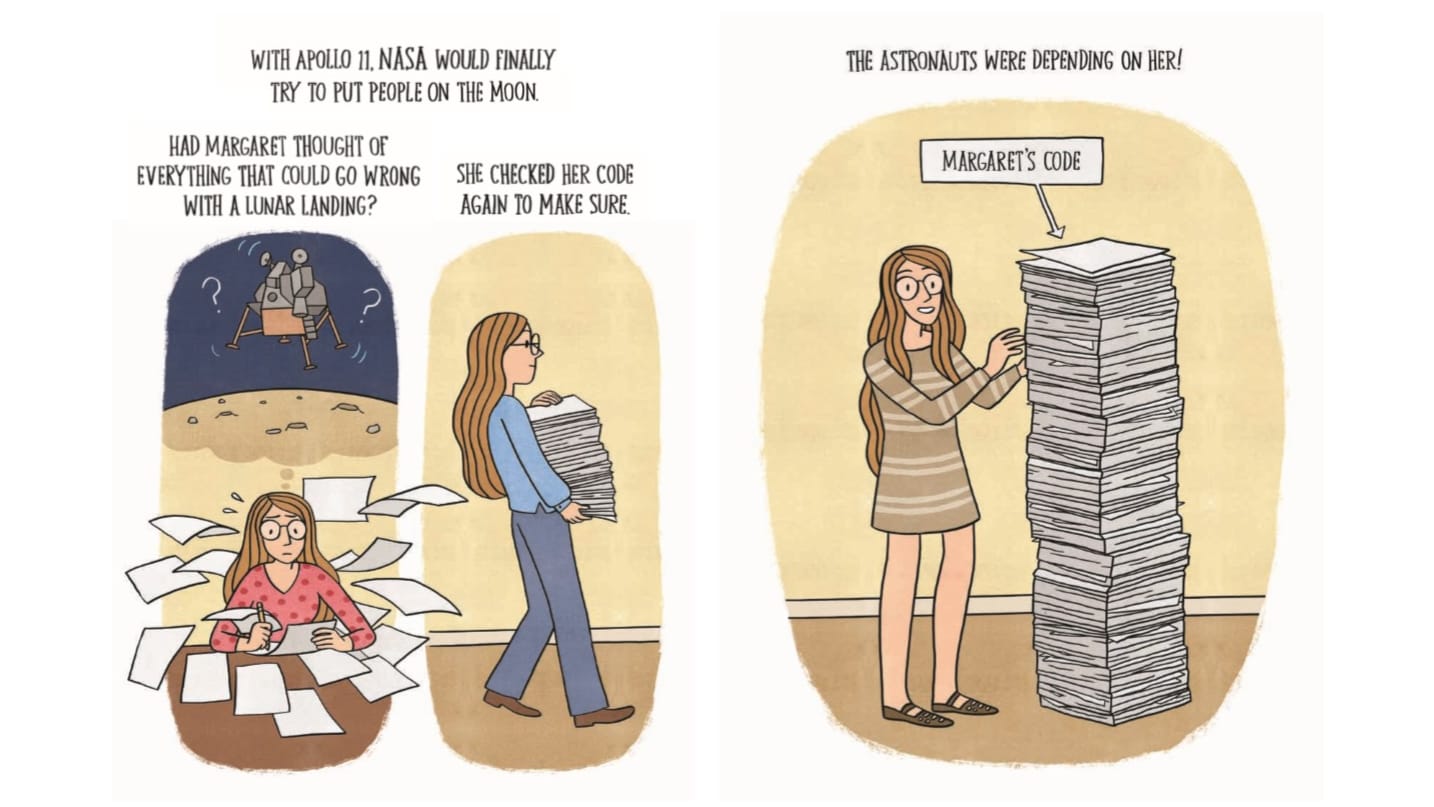
One iconic photograph shows Margaret Hamilton standing beside a stack of printed Apollo mission code as tall as she is. This image, which went viral years later, remains a symbol of scientific confidence and innovation. Although Margaret was always modest about her contribution, her work paved the way for future generations.
A Legacy That Inspires
Later in her career, Hamilton worked on the Skylab and Space Shuttle programs, and in 1976, she founded her own software company. Her contributions were rightfully recognized in later years: she received the Presidential Medal of Freedom, was featured in the LEGO "Women of NASA" set, and in 2019, Google honoured her with a portrait created using moonlight in the Mojave Desert.
Margaret Hamilton's life serves as a lesson that there are no impossible obstacles in the world of technology if one approaches problems with creativity and courage. She leaves behind a legacy that inspires not only those in space exploration but anyone striving to make their mark in technology today.