Lawyer Builds Custom AI Server to Ensure Client Confidentiality
By using second-hand enterprise hardware, a legal professional has created an offline environment for sensitive document analysis.
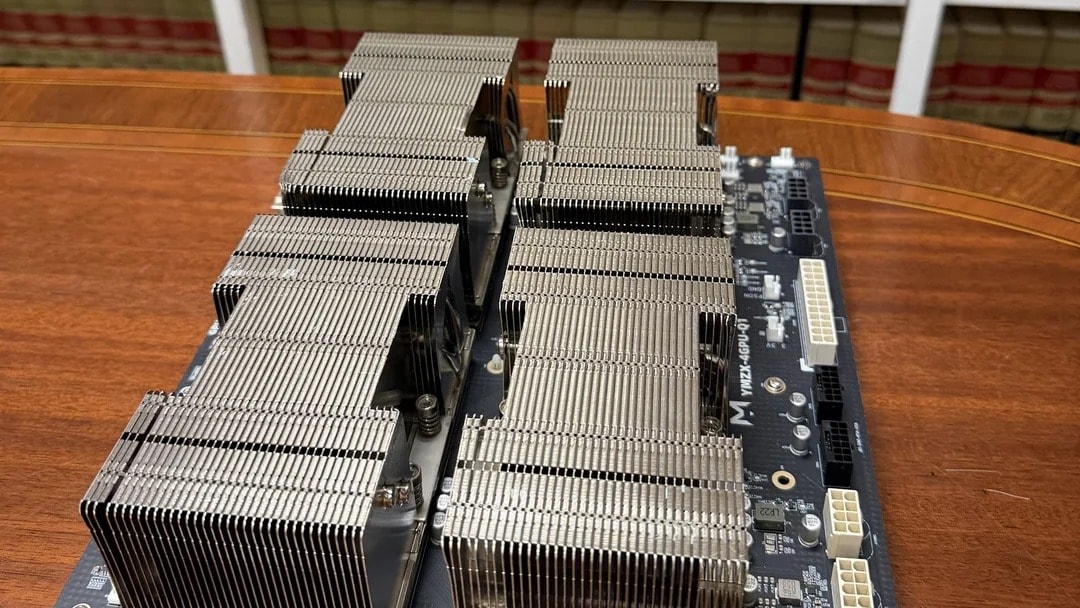
In the era of artificial intelligence, data privacy has become critical, particularly in fields handling confidential documentation. One lawyer has taken steps to secure their workflow by building a powerful, home-based AI server that operates entirely independently, without an internet connection.## Technical Challenges and ArchitectureThe heart of the system consists of eight second-hand Nvidia Tesla V100 (32GB) GPUs. These cards, primarily designed for data centres, are mounted on specialized SXM2 sockets. The project creator utilized two separate boards that communicate via PCIe slots. To ensure system stability, a complex cooling and power management setup was required; the server consumes up to 2,800 watts of power.The complete configuration features a Threadripper Pro platform and 256GB of RAM. With these resources, the system can run the DeepSeek V4.1 Flash model. Although the model is substantial, it fits entirely within the GPU memory, ensuring high processing speeds: up to 215 tokens per second for code generation and 118 tokens per second when processing legal documents.## Why This MattersThe primary goal is the protection of client cases. The lawyer stated they do not want to send sensitive information to cloud services, where data security is not always fully controllable. This server allows for the automated extraction of facts, summarization, and initial document editing without information leaving the office walls.Building the system was not without difficulty. The process involved technical hurdles, including a power connector that melted due to overheating and various PCIe errors. However, after optimization—including limiting GPU clock speeds—the system began operating stably. The author notes that while this project is currently more of a hobby, it could potentially evolve into a business idea in the future.## What Lies AheadAlthough building such systems is expensive and labour-intensive, this case demonstrates that legacy enterprise hardware can become an accessible alternative for those requiring high computing power and maximum privacy. The lawyer plans to further refine the system to handle multiple simultaneous requests.For legal firms or private practitioners working with highly sensitive data, this approach offers an interesting model. While the technical knowledge and investment required are significant, maintaining full control over data may prove to be a more profitable and secure solution in the long term.