Keybytes: The Modular Keyboard You Can Build Like Lego
An open-source project by an MIT student changes the way we build keyboards.
A Keyboard as a Construction Set
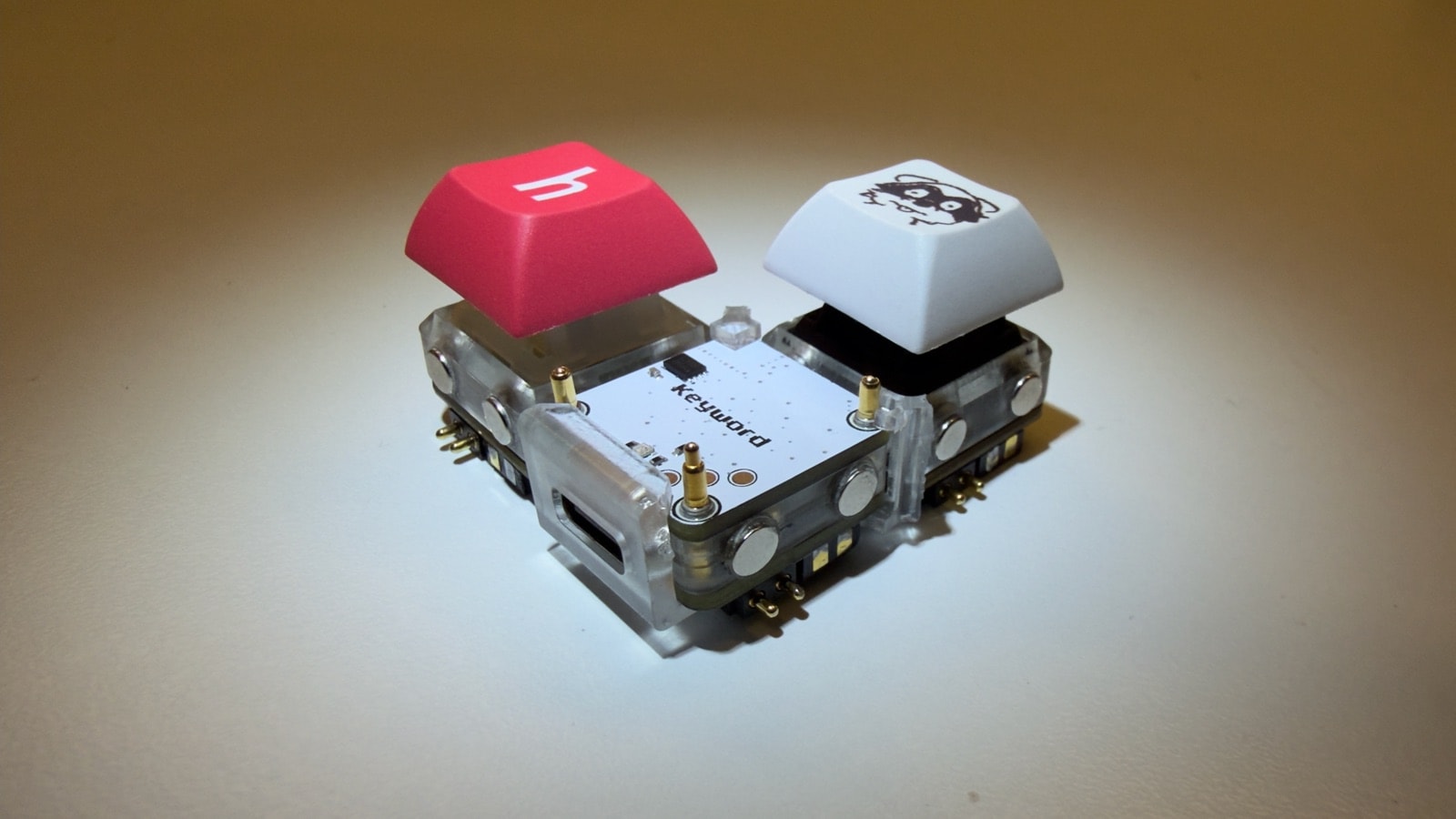
An innovative project has emerged in the world of keyboards that offers users complete creative freedom. MIT student Nathan Alsop has created Keybytes, an open-source project that reimagines the traditional approach to keyboard assembly. Instead of a fixed layout, users can connect individual keys, known as "Keybits," using magnetic connectors to build a keyboard of any shape.
The core concept of the project is modularity. Each Keybit is a 19.05 x 19.05 mm unit, following the standard 1U size. Every key contains a built-in RISC-V microcontroller, meaning each piece operates independently rather than relying solely on a central processor. The keys connect on all four sides using pogo pins, which facilitate both power delivery and data exchange via the I2C protocol.
Technical Details and Cost
The central component of the system is the Keyword controller. It consists of two layers: the top board houses an Arm Cortex-M4 microcontroller, a Bluetooth antenna, and flash memory, while the bottom board manages USB-C connectivity, charging, and power distribution. As for the keys themselves, each supports Cherry MX-style mechanical switches, allowing users to customise the tactile feel of their keyboard.
However, this level of flexibility comes at a significant price. The author estimates that building a full-sized keyboard, which requires approximately 110 Keybits and two Keyword controllers, costs around $900. This figure includes the production of printed circuit boards, component procurement, soldering, and 3D-printed housing. The project is currently in its early stages and is aimed more at enthusiasts than the mass market.
Future Prospects
Currently, Keybytes does not offer features such as RGB lighting or dedicated multimedia keys, but the author has released all designs and technical documentation on GitHub under an MIT license. This means anyone can refine the project, create their own modules, or modify the design. Future developments could include additional modules such as fingerprint scanners, touch panels, or rotary controllers.
Despite the high cost, Keybytes represents a significant step in the development of personalised technology. For users interested in mechanical keyboards and DIY culture, this project offers an intriguing opportunity, though its practical application currently requires substantial technical knowledge and investment.