Japan Launches Historic Mission to Mars’ Moon
Unlocking the Secrets of Mars
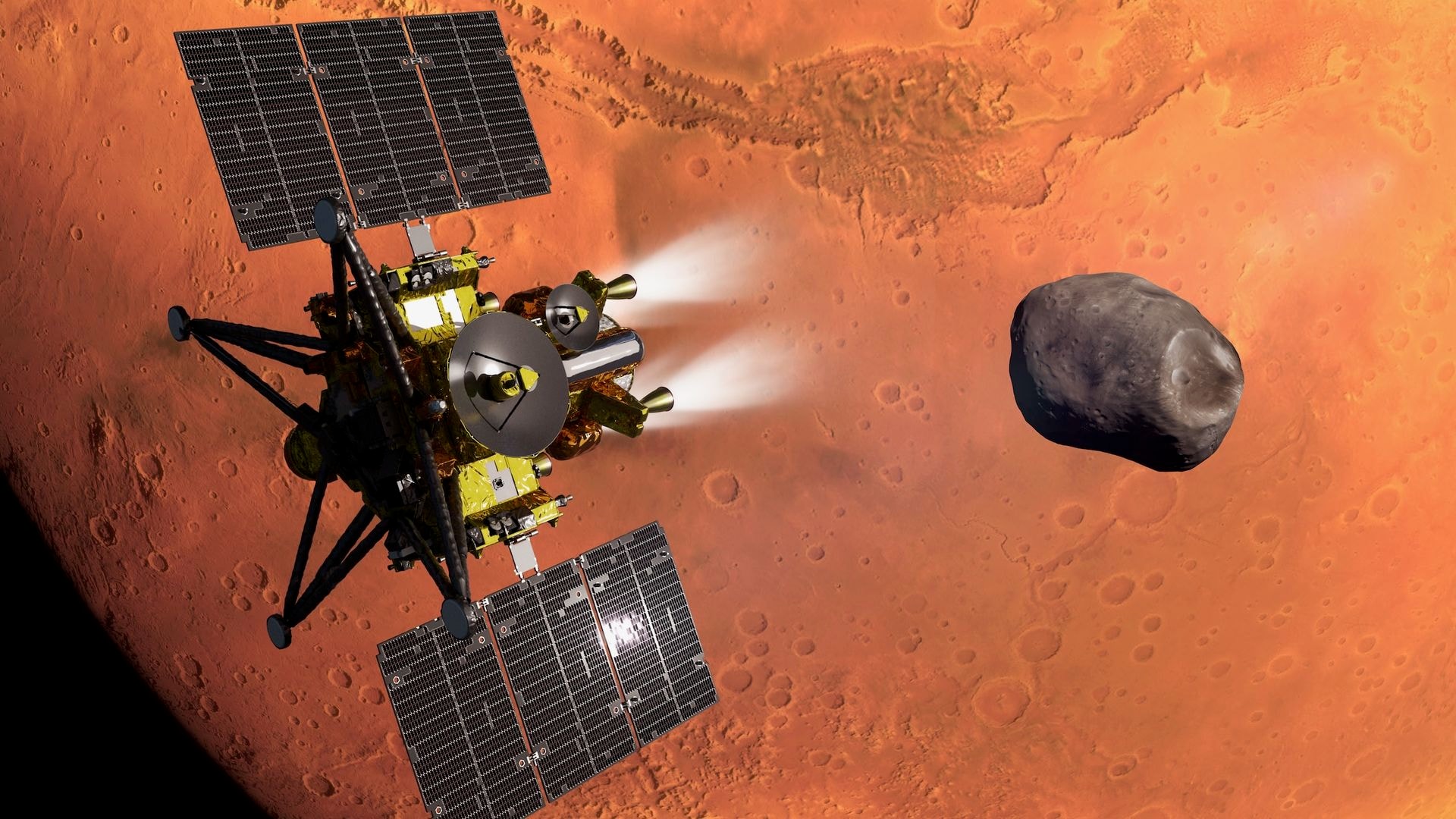
The Japan Aerospace Exploration Agency (JAXA) is embarking on a historic mission today. An H3 rocket is set to launch from the Tanegashima Space Center, carrying the Martian Moons eXploration (MMX) spacecraft toward the Martian system. This ambitious project aims to study Mars' two small moons, Phobos and Deimos, and, most importantly, return soil samples from the surface of Phobos to Earth.
Although Mars' moons have been observed by astronomers for decades, their origins remain unclear. Scientists are considering two primary hypotheses: either the moons are debris formed by a large cosmic body colliding with Mars, or they are ancient asteroids captured by Martian gravity. Answering this question is crucial for understanding the evolution of not just the Red Planet, but the entire solar system.
Mission Details
The MMX spacecraft will reach Mars' orbit in August 2027. A month later, it will transition to the orbit of Phobos to begin remote sensing of both Phobos and Deimos. One of the most intriguing stages will occur in early 2029, when the spacecraft deploys the French-German rover, Idefix, onto the surface of Phobos. Although the rover weighs 25 kilograms on Earth, due to the extremely low gravity of Phobos, it will weigh just 15 grams on the surface.
Idefix's primary task is to analyze the composition and texture of the soil, which will assist the main MMX spacecraft in selecting the best landing site. In 2030, the spacecraft will land on Phobos itself, collect at least 10 grams of samples, and begin its journey back to Earth. Scientists expect the samples to arrive on Earth by 2031.
International Collaboration and Experience
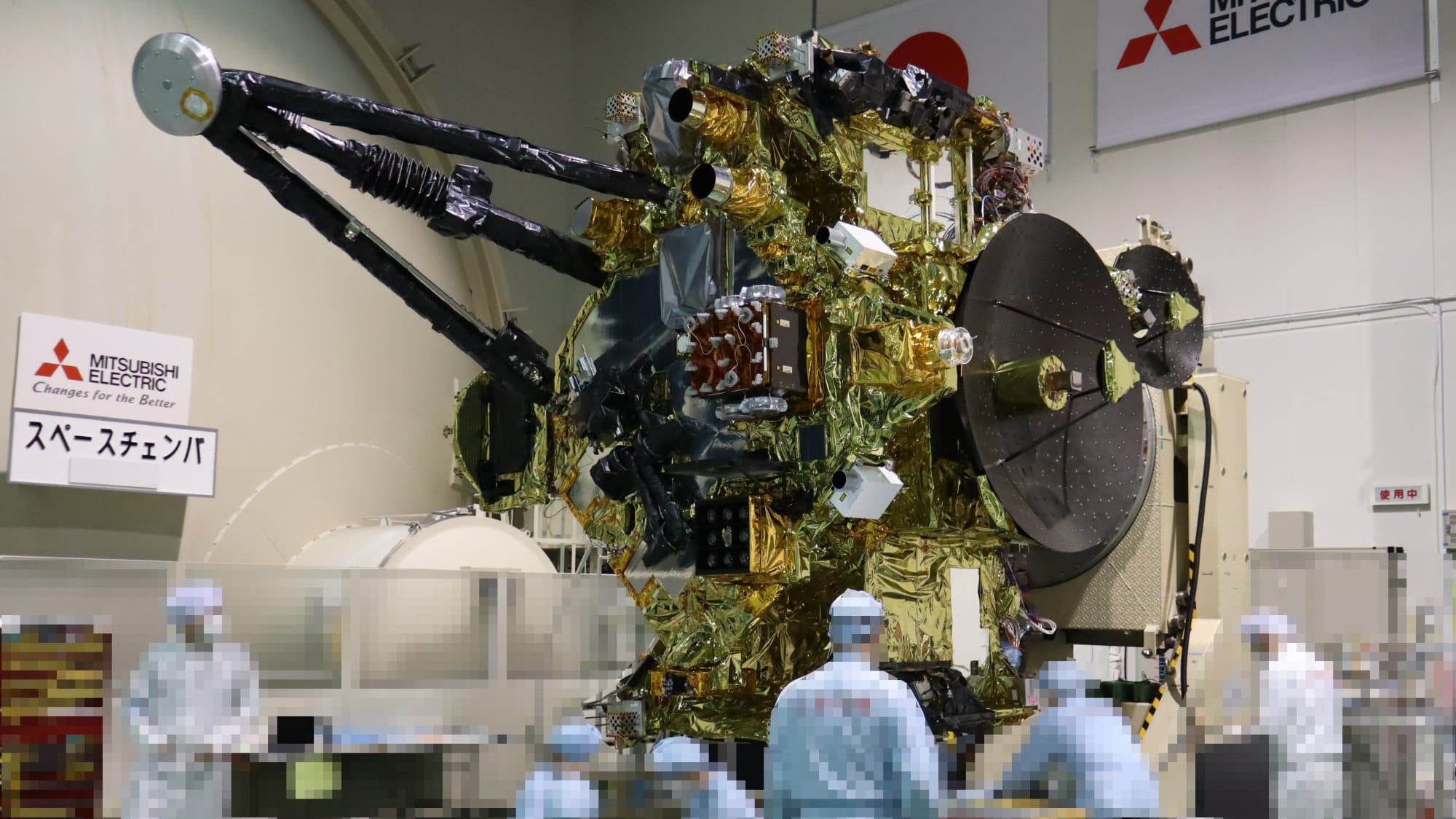
It is worth noting that this mission is not solely a Japanese effort. NASA is actively participating in the project, providing scientific instruments, communication support, and funding for American scientists. This collaboration highlights the significance of the project for global science.
Japan has solid experience in similar types of missions. The country successfully executed the Hayabusa and Hayabusa2 missions, which returned samples from the asteroids Itokawa and Ryugu to Earth. Although the launch of MMX was delayed from 2024 due to technical issues, scientists remain optimistic.
For those of us watching from Georgia, this mission serves as further proof of how rapidly space technologies are evolving. While this event does not directly affect our region, these fundamental scientific achievements ultimately expand the boundaries of human knowledge, which will reflect on global technological progress in the long term.