India’s Smartphone Market Hits a Decade-Low Anti-Record
Rising component costs and consumer passivity drive the sharpest decline in a decade.
A Crisis in the Indian Market
The Indian smartphone market suffered a historic decline in the third quarter of 2026. Analytical data indicates that shipments dropped by 20% year-on-year, representing the lowest level recorded in the last ten years. This sharp market contraction is directly linked to the rising cost of memory components, which has significantly inflated the production costs of devices.
The situation is particularly dire in the budget segment. Shipments of smartphones priced under 20,000 Indian rupees (approximately $210 USD) fell by 47%. Consumers are increasingly hesitant to upgrade their devices, opting to retain their existing phones for longer periods, which has forced manufacturers to reduce inventory levels.
Market Leaders and New Trends
Despite the general downturn, competition between brands remains intense. After a nine-quarter hiatus, Samsung has reclaimed its position as the market leader with a 17% share, driven largely by the popularity of the Galaxy A series. Vivo holds second place with 16%, while Oppo and Xiaomi (including Poco) share third and fourth positions with 12% each.
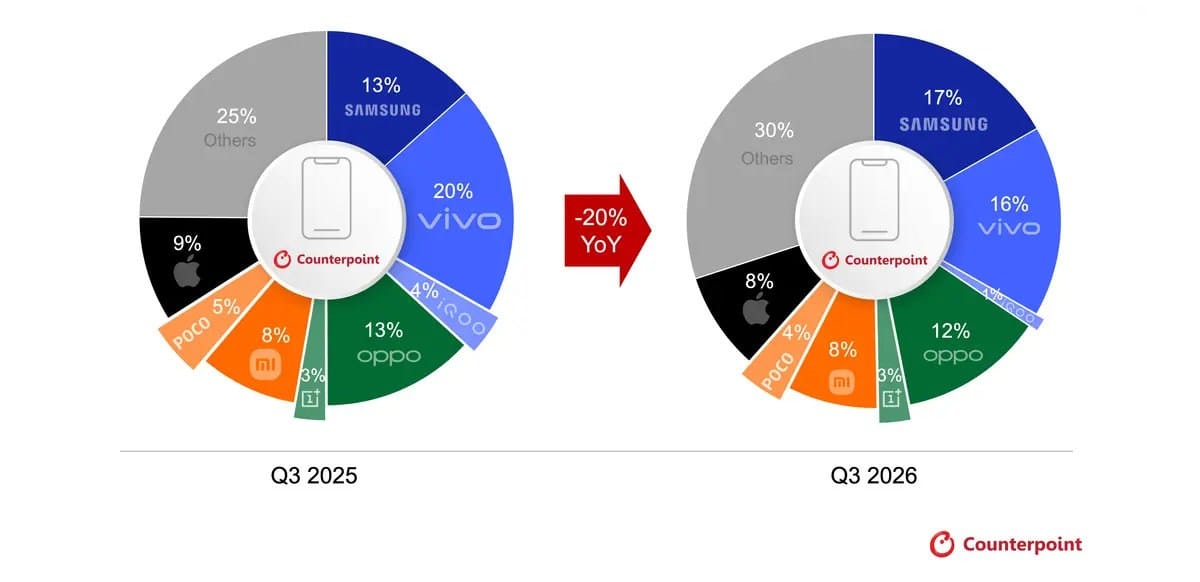
Interestingly, Apple’s position in the premium segment remains strong: initial sales of the iPhone 18 Pro series are 20% higher than the performance of last year’s iPhone 17 Pro models. Meanwhile, fast-growing players have emerged, such as Ai+ Smartphone, which increased its sales by 306%, and Google, which saw a 50% growth with the help of its Pixel 11 series.
What to Expect in the Future
Analysts project that the Indian smartphone market will contract by a total of 13% throughout 2026. Following the end of the festive season, another wave of price hikes is expected, creating further barriers for buyers. Manufacturers are already attempting to mitigate the situation by offering 4G models with lower specifications for the mass market.
2027 will remain full of challenges for India’s technology market. While consumers may be waiting for smartphones to become more affordable, current realities suggest the opposite. The financial pressure on the market and the rising cost of components are likely to remain the primary factors defining the smartphone industry for some time.