Iapetus: The History of Saturn’s Mysterious 'Yin-Yang' Moon
An Astronomical Discovery in the 17th Century
October 25, 1671, marks a significant date in the history of space exploration. It was on this day that Italian astronomer Giovanni Cassini discovered Iapetus, a new moon orbiting Saturn. It was the second satellite humanity had identified within the Saturnian system, following the discovery of Titan by Dutch astronomer Christiaan Huygens six years earlier. Following the discovery of Iapetus, Cassini went on to find three more moons during his career: Rhea, Tethys, and Dione.
Mysterious Disappearances and the 'Yin-Yang' Effect
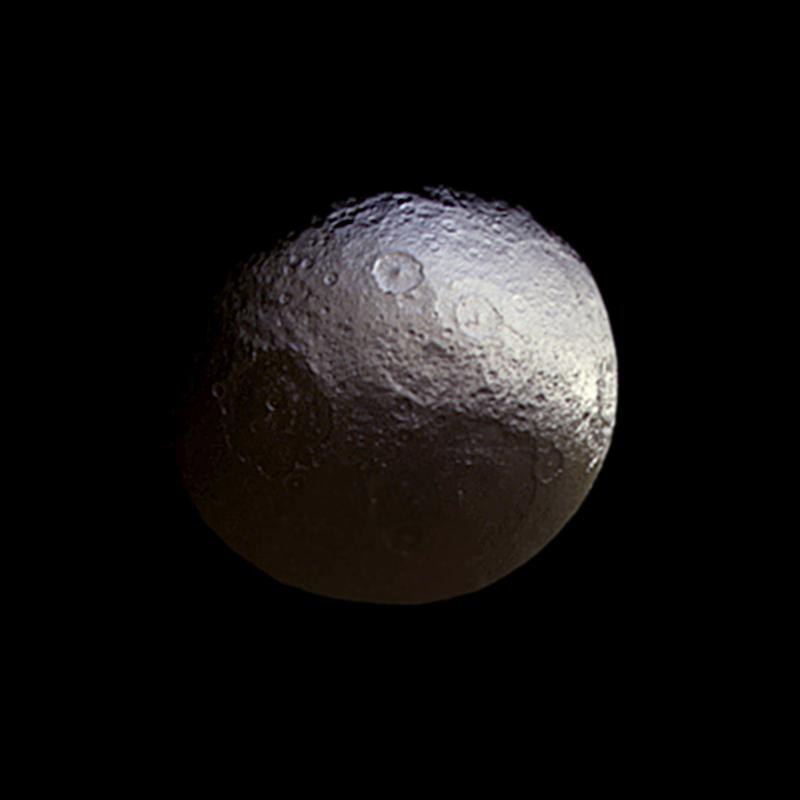
While studying Iapetus, Cassini observed a peculiar phenomenon. After first spotting the moon on the western side of Saturn, he calculated its orbit and predicted he would see it on the eastern side 39 days later. However, the moon was nowhere to be found. When it eventually reappeared on the western side, the scientist realized that one side of the moon was significantly darker than the other. This phenomenon made observation difficult whenever the moon's darker hemisphere was turned toward Earth.
Centuries later, NASA’s Cassini spacecraft captured high-resolution images that confirmed the unique appearance of Iapetus. The two-toned nature of the surface, which resembles the Chinese yin-yang symbol, earned it the well-deserved nickname of the "yin-yang moon."
What Iapetus Teaches Us About Saturn
Research into Iapetus has taught scientists a great deal about the evolution of the Saturnian system. Using computer simulations, researchers have concluded that Saturn's inner moons and its rings are relatively young formations. Distant moons like Titan and Iapetus, however, likely formed during a different period.
According to the prevailing theory, Saturn once possessed a different system of moons, but their orbits were disrupted by orbital resonance caused by the planet's movement around the Sun. As a result, neighboring moons collided. It is from these cosmic "fragments" that Saturn’s current rings and moon system were formed. This discovery remains a significant pillar for planetary science, helping us understand how celestial bodies are created and transformed over billions of years.