Gravitational Tug-of-War in Earth's Core Alters Length of Day
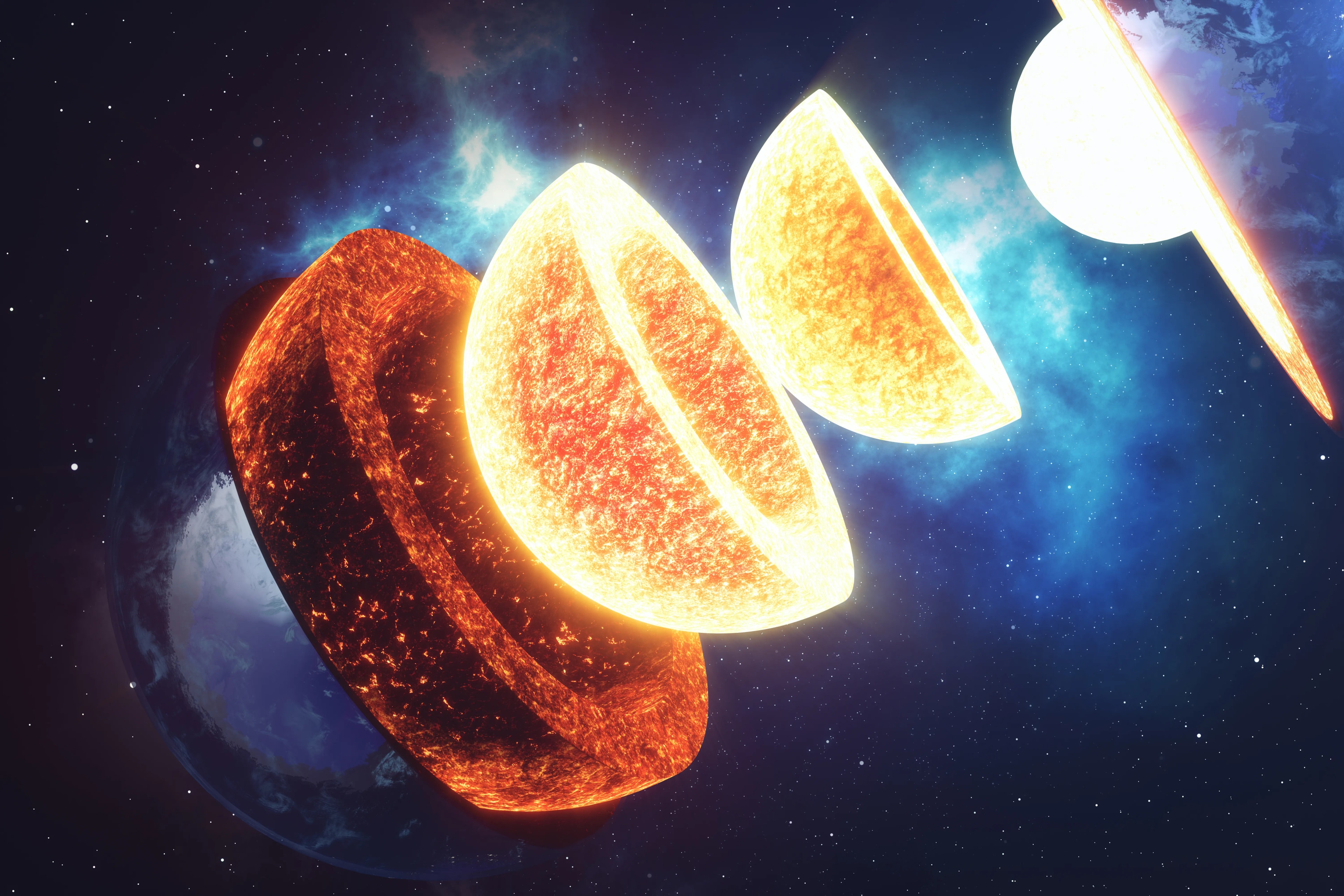
Geophysical processes occurring deep within the Earth directly affect the planet's rotation speed and, consequently, the length of the day. As reported by Wired, scientists have discovered that the interaction of gravitational and other physical forces between the inner core and the mantle alters Earth's dynamics.
Our planet's structure consists of several layers, with the solid inner core located deepest of all. It is surrounded by a liquid outer core, above which lie the mantle and the Earth's crust. The inner core rotates independently, and its speed of movement does not always match the rotation of the planet's surface.
Gravitational forces clash
According to new research, a gravitational tug-of-war takes place between the inner core and the mantle. The redistribution of mass within the core and the forces exerted by the mantle cause the rotation speed to change periodically. Although these changes are invisible to the naked eye, high-precision atomic clocks can detect them.
Scientists explain that the inner core can slightly accelerate or decelerate its rotation. When the movement of the core changes, the law of conservation of momentum dictates that the rotation speed of the mantle and crust changes as well. Consequently, the length of a day periodically shortens or lengthens by tenths of a millisecond.
Why this matters
At first glance, millisecond changes do not affect human daily life, but they are critically important for modern technologies. Global navigation systems (GPS), satellite communications, and high-speed data networks rely on absolute temporal accuracy.
Furthermore, studying Earth's internal processes helps us better understand the mechanisms generating the planet's magnetic field, which shields Earth from harmful solar radiation. Scientists plan to continue monitoring core dynamics to better predict future changes in the planet's rotation.