Google's SynthID: How to Identify AI-Generated Content
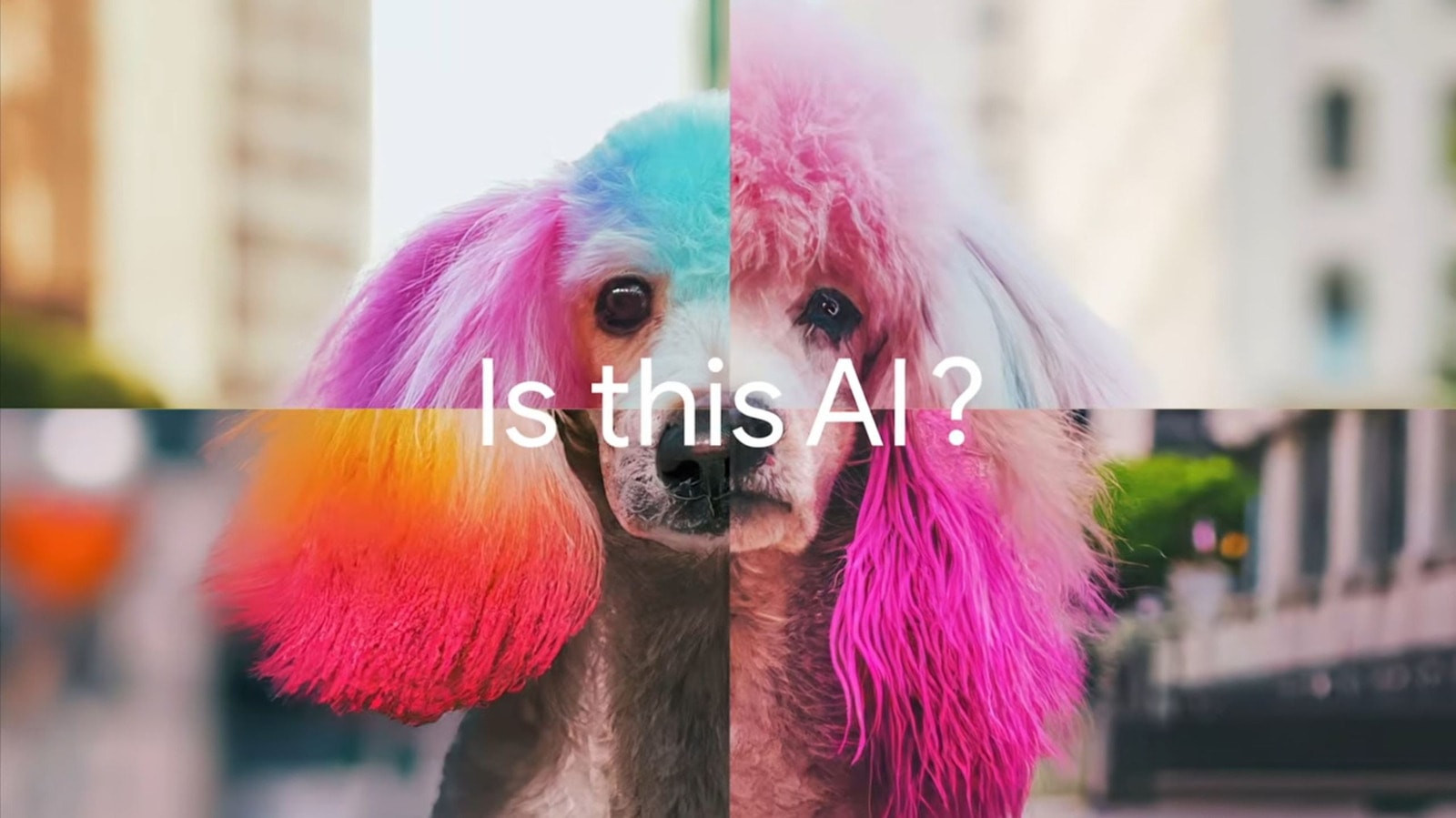
In a digital era where AI-generated images, videos, and audio files are rapidly flooding the internet, distinguishing between authentic and synthetic content has become increasingly difficult. Google has now stepped in to address this challenge by making its SynthID Detector available to the public. While this is a significant move in the fight against misinformation, the tool comes with specific technical constraints.
How the SynthID Detector Works
Introduced in 2023, SynthID is a technology that embeds invisible digital watermarks into AI-generated files. Previously, verifying these watermarks was restricted to a small circle of researchers and journalists. Now, anyone can visit SynthID.com to check a file. Users simply upload an image, video, or audio clip, and the system provides a response within seconds indicating whether the file contains traces of AI generation.
It is important to note that the tool provides only a "yes" or "no" answer. It does not analyse the content of the file or indicate which specific parts were generated by AI. This approach is intended to minimise false positives, a common issue with other detection methods.
Partnerships and Limitations
Google’s tool is not limited to its own models. Through the SynthID framework, Google collaborates with other tech giants, allowing the detector to identify files created by models from OpenAI, NVIDIA, and Kakao. A partnership with Apple is already underway, though the capability to detect their content is still in development.
However, the system has significant drawbacks:
- Limited Scope: If an AI model does not use the SynthID watermark—such as Meta’s tools—the detector cannot identify it.
- Security Limits: To prevent misuse, Google has set a limit of 10 checks per day per user. Additionally, users must authenticate with a Google, OpenAI, or Apple account to use the service.
- Lack of Universality: Currently, there is no single, universal detector that can identify all types of AI content. Different companies use their own proprietary protection mechanisms that are not fully compatible with one another.
Why This Matters
Previously, to verify content authenticity, users had to ask Gemini whether a specific file was created with its assistance. This method was often unreliable for those skeptical of AI or those wishing to avoid it entirely. The transparent SynthID Detector web platform provides users with greater control.
For users globally who rely on digital platforms, this tool serves as an additional filter against misinformation. Although the technology is still evolving, its availability will help improve media literacy and encourage a more critical approach to the visual and audio material circulating online.