Google's Gemini 4 Solves a 59-Year-Old Nuclear Fusion Puzzle
AI-driven breakthrough in magnetic field modeling
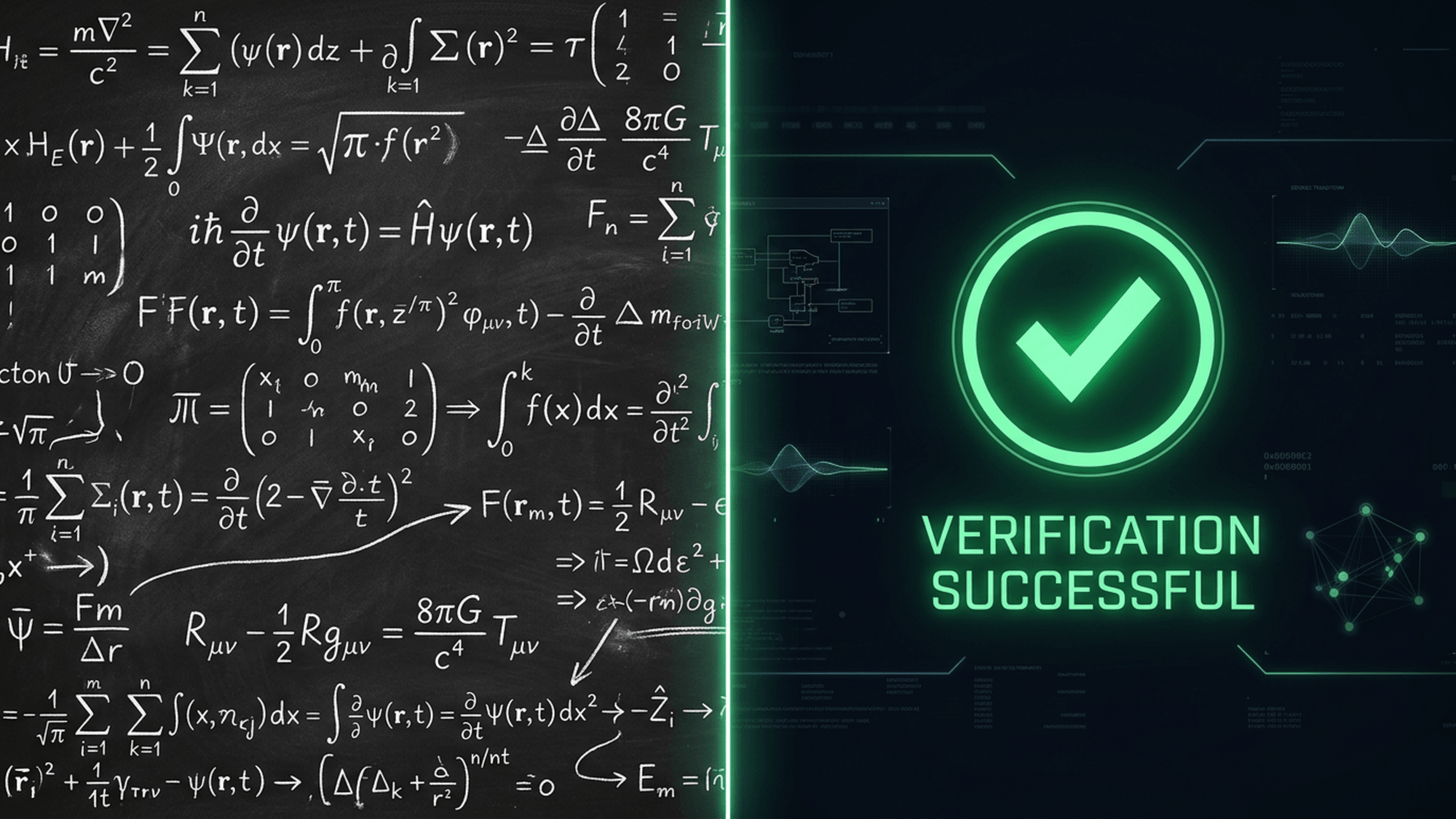
The Role of AI in Fundamental Physics Research
Google's latest model, Gemini 4 Argon, has provided a significant gift to the scientific community. It has successfully solved a mathematical challenge that has troubled physicists since 1967. The issue concerns the configuration of magnetic fields required to contain plasma within thermonuclear fusion reactors. While this discovery does not immediately translate into commercial energy production, it establishes a fundamental basis for making reactors more efficient and manageable.
Harold Grad’s Hypothesis and Its Refutation
In 1967, physicist Harold Grad proposed a hypothesis describing the conditions for equilibrium in three-dimensional magnetic fields. For decades, this theory guided the direction of plasma research. However, in September 2026, University of Maryland researcher Matt Landreman, aided by OpenAI's GPT-6 Astra Pro, proved that this hypothesis was incomplete. He presented precise mathematical solutions that contradicted Grad's assumptions.
The core problem was that all previous solutions relied on geometric symmetry. Researchers lacked concrete examples of configurations that did not exhibit this symmetry. This is where Google's Gemini 4 Argon intervened; working alongside a team of researchers, it was able to expand existing mathematical models and identify new, symmetry-free configurations.
How AI Accelerated the Scientific Process
Researchers utilised Gemini 4 Argon within Google's Antigravity environment. In just a few hours, the AI agents managed to lift mathematical constraints and propose configurations that were previously unattainable. It is important to note that the AI did not 'invent' fusion, but rather accelerated highly complex computational processes.
Ultimately, the researchers obtained a much broader spectrum of mathematical models. This data will allow physicists to more accurately verify computer simulations that control magnetic confinement. Although the AI took on part of the research, scientists maintained control and personally verified the accuracy of all mathematical conclusions. This achievement confirms once again that artificial intelligence is becoming an indispensable assistant to science when it comes to large-scale, complex calculations.