Google DeepMind Unveils AlphaGenome 2 for Genomic Research
The new AI model predicts the impact of genetic changes in specific cells with twice the efficiency of its predecessor.

Cellular Precision
Google DeepMind has taken a significant step in genomic research with the launch of AlphaGenome 2. The system is designed to predict the impact of genetic variations not on general tissues, but on individual, specific cells within the human body. This approach allows scientists to identify the cellular mechanisms behind diseases with much greater accuracy.
While every cell in the human body contains the same DNA, they interpret genetic information differently. For example, a heart muscle cell and an immune system cell activate genes in entirely different ways. The previous generation model, AlphaGenome, attempted to analyze DNA sequences of a million letters across multiple tissues simultaneously, which dispersed the model's resources and made it difficult to perceive differences between similar cells.
AlphaGenome 2 utilizes a radically different architecture. As a "conditional model," it considers the specific biological state of a cell alongside the DNA sequence. The model was trained on more than 107 million cellular profiles from 68 human and mouse tissues. Consequently, it predicts gene activity while also analyzing how DNA is coiled within the nucleus and which chemical switches (methylation) regulate gene function.
Practical Results and Research Potential
During testing on the TenK10K database, which includes 28 types of immune cells, AlphaGenome 2 successfully identified 30% of disease-causing variants, significantly outperforming its predecessor. The model can also fill in missing data: if researchers only have gene activity data, the system automatically determines the quality of DNA packaging, simplifying the planning of laboratory experiments.
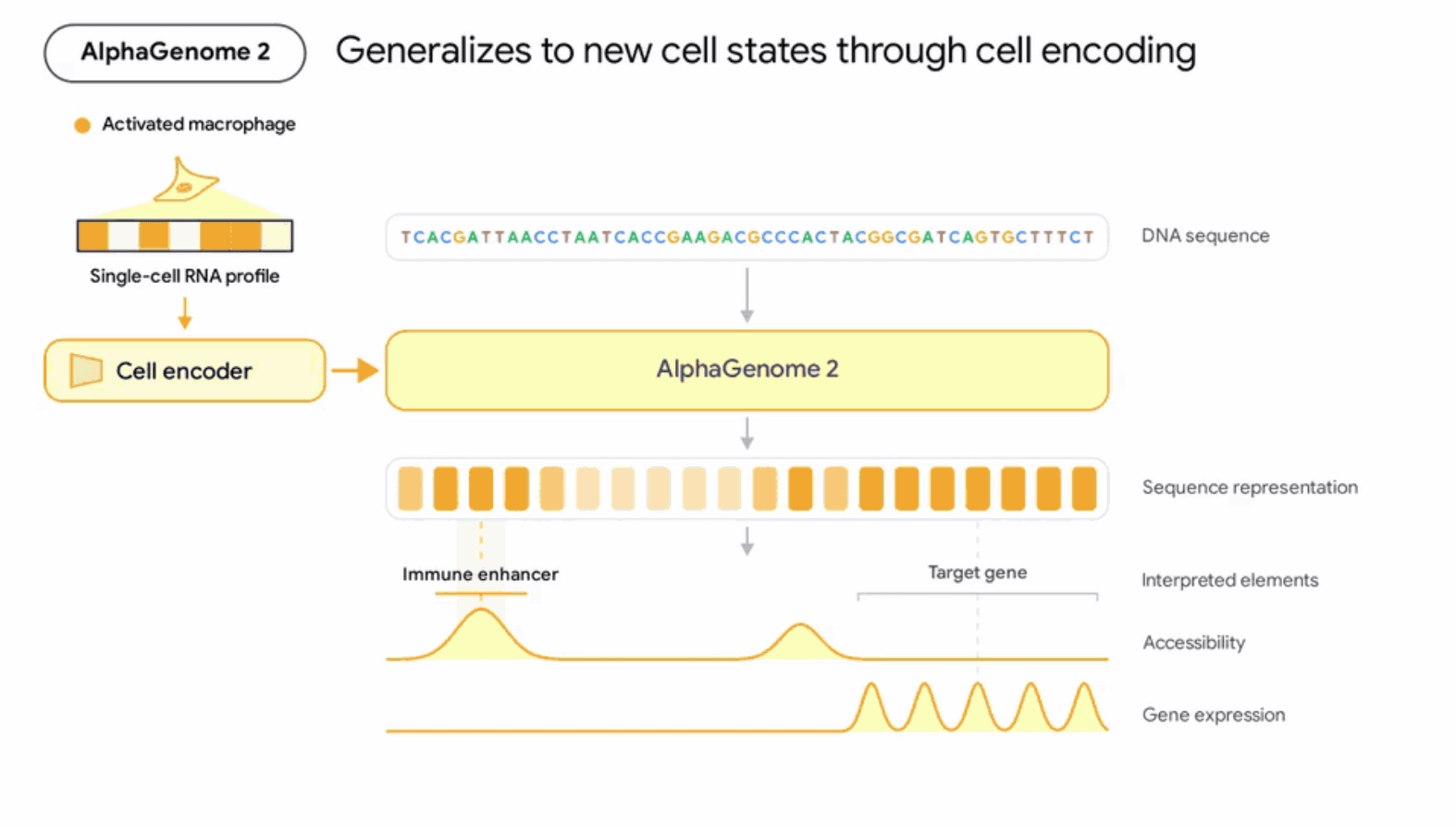
The model's effectiveness has already been proven in real-world scenarios. It successfully identified the mechanism of inflammatory bowel disease and revealed a genetic variant that affects only intestinal macrophages. During COVID-19 vaccination research, the model showed that a specific genetic mutation causes disruption in the cell's active state, a detail that had previously gone unnoticed.
Accessibility and Future
AlphaGenome 2 is currently available for non-commercial research via an API, while testing for commercial users is ongoing in a closed mode. It is important to note that the system is not yet approved for clinical diagnostics. Google DeepMind plans to integrate the model into its Google Antigravity platform, where it will become part of automated research processes alongside Gemini 4.
For researchers, including those in Georgia, this technology opens new possibilities in genomic medicine. Although the system does not provide direct clinical diagnoses, its use will play a major role in accelerating genetic research and developing personalized medicine, which in the long term will create entirely new ways to treat diseases.