Google Chrome Introduces New Warning System for Suspicious Websites
The new security feature helps users differentiate between potential risks and clear threats.
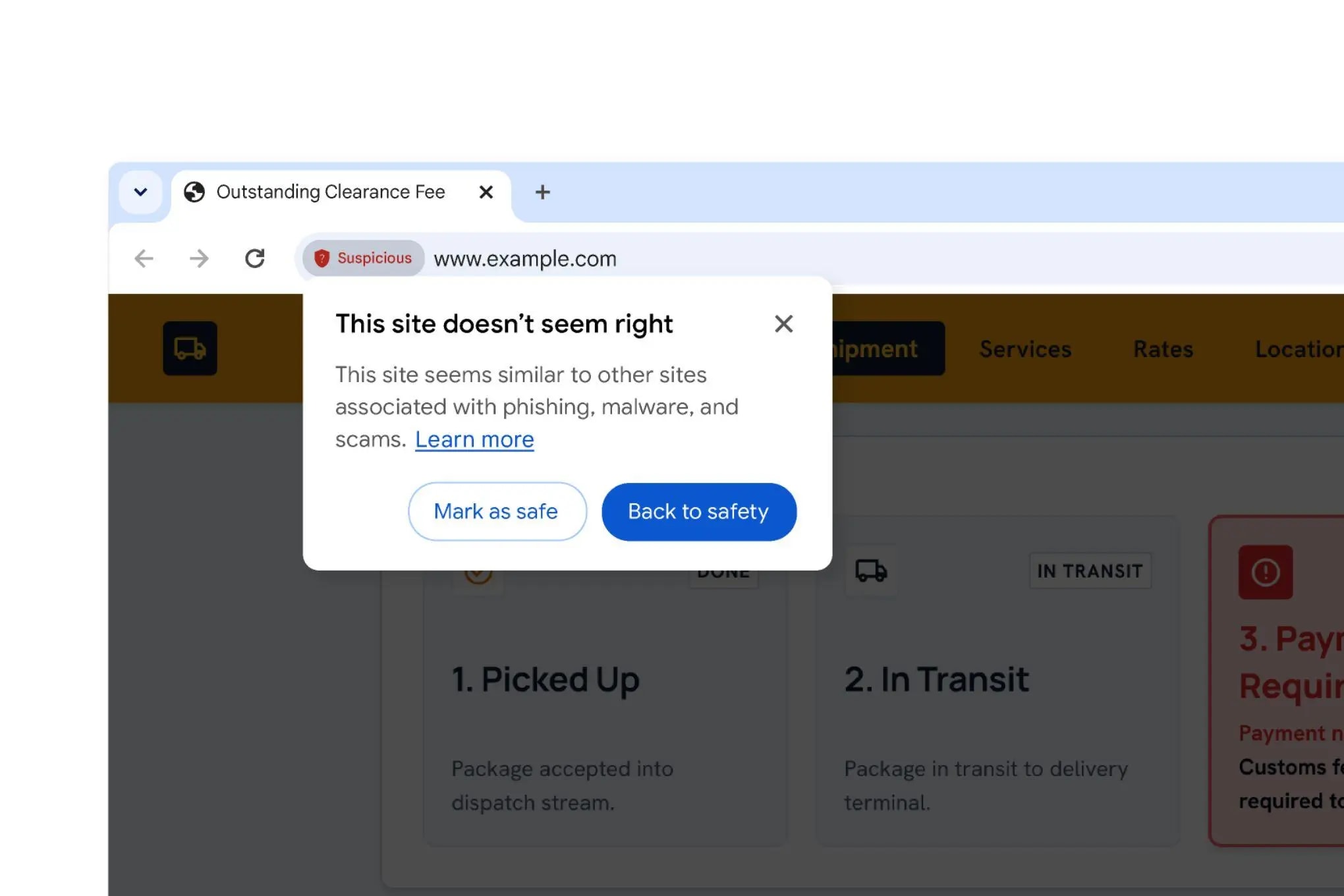
Google has rolled out a new security mechanism for its Chrome browser that alerts users to the trustworthiness of a website before they access it. This update builds upon the file download security system introduced in 2024, which visually distinguishes between "suspicious" and "dangerous" files.
The Difference Between Suspicious and Dangerous Sites
Under the new system, the browser will flag a website as "suspicious" if it detects characteristics associated with phishing, malware, or fraudulent schemes. Google explains that this is a less categorical verdict, indicating a potential risk. However, as there is a possibility that the system may flag a site in error, users retain the choice to proceed if they are entirely confident in the website's safety. Conversely, the "dangerous" category refers to high-risk resources that are strongly discouraged from being visited.
Visual Identification and Enhanced Protection
Google has ensured that users can determine the level of threat at a glance. When visiting a suspicious site, a pop-up window will appear, slightly dimming the page content while keeping it visible. This window includes a "Mark as safe" button, allowing users to notify the system if they believe the site is secure. In the case of dangerous sites, Chrome’s reaction is much more stringent: the screen turns entirely red, and the warning occupies the full space, serving as a clear signal for the user to leave the site immediately.
Simultaneously, the company has improved its Gemini-based fraud detection system, which is intended for users of the "Enhanced Protection" mode. It is not yet clear whether this new warning system applies to all Chrome users or only those with the enhanced protection layer. These changes represent a significant step in cybersecurity, particularly as phishing attacks and online fraud continue to pose growing challenges for users globally. Pre-assessing sites and providing visual warnings will help internet users avoid personal data breaches and financial loss.