Germany and Nvidia Forge Strategic Partnership for AI Development
The collaboration focuses on integrating 'Physical AI' into the nation's industrial sectors.
A New Partnership for Germany’s Industrial Future
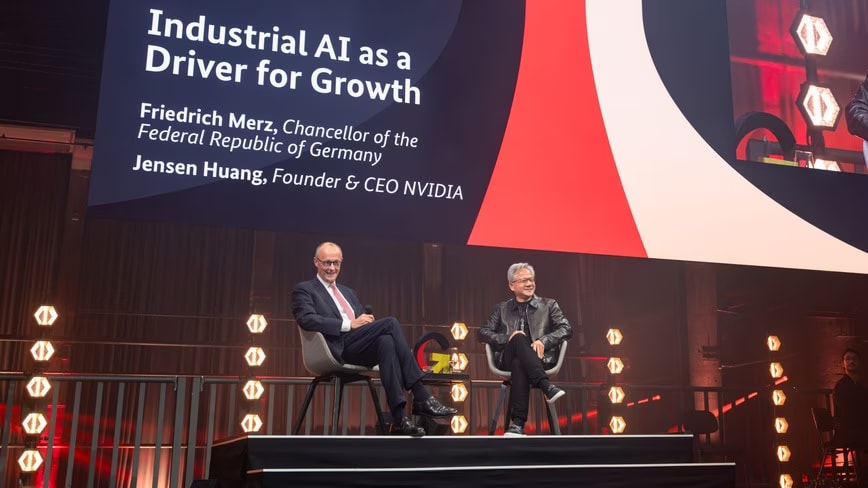
At the Invest in Germany summit held in Berlin, German Chancellor Friedrich Merz and Nvidia CEO Jensen Huang officially confirmed the start of a bilateral collaboration. The agreement aims to integrate artificial intelligence (AI) into key sectors of the German economy, including automotive manufacturing, the chemical industry, and engineering.
According to Nvidia, the primary focus of this partnership is on "Physical AI." This technology involves using AI for the autonomous operation of robots, vehicles, and various types of machinery. The Chancellor stated that Germany’s goal is to become a global leader in the industrial implementation of artificial intelligence.
Investments in Startups and Industrial Giants
As part of Nvidia’s European investment plan, which totals nearly $10 billion, the company has already selected four German startups: Agile Robots, Avelios Medical, Mirelo, and Reflex Aerospace. Additionally, Nvidia and Siemens will collaborate on the concept of "smart factories," where production processes will be entirely managed by AI.
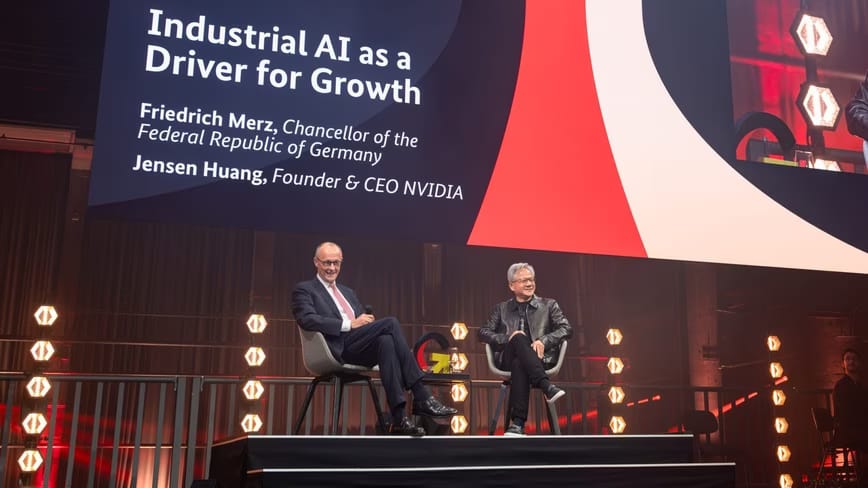
Friedrich Merz highlighted the unique role of the German "Mittelstand" (small and medium-sized enterprises). He noted that the data accumulated within these companies is the primary resource that will drive AI development and boost Germany’s competitiveness. Jensen Huang emphasized during the meeting that AI should not be viewed as a replacement for humans, but as a powerful new tool that enhances human capabilities.
Economic Ambitions Through 2035
The summit featured the "Made for Germany" initiative, which, under the leadership of Siemens and Deutsche Bank, brings together over 150 companies and investors. The group projects that by 2035, investments in AI, energy, and defense in Germany could reach €4.1 trillion.
The German government is actively seeking to accelerate the country's economic growth to cope with increasing international competition. The event was attended by industry giants such as Mercedes-Benz, Bayer, Lufthansa, and Deutsche Telekom, underscoring the German industrial sector's readiness for digital transformation.