Gears of War: E-Day and the New Role of SSDs in Memory Management

Gears of War: E-Day and its innovative approach to data streaming
Gears of War: E-Day stands out as one of the most visually demanding titles released this year, leveraging the full capabilities of Unreal Engine 5. Beyond its visual fidelity, the game employs a technical strategy that is particularly vital for PCs with limited hardware resources. Developer The Coalition has implemented a new data management system that effectively utilizes NVMe SSDs as an extension of system RAM.
How memory optimization works
Traditionally, games attempt to store as much data as possible in RAM to ensure rapid access. In the case of Gears of War: E-Day, the studio developed an algorithm that dynamically loads and offloads complex environments and objects directly from the NVMe drive. This approach is especially effective for systems with limited RAM, such as those with 16GB or less.
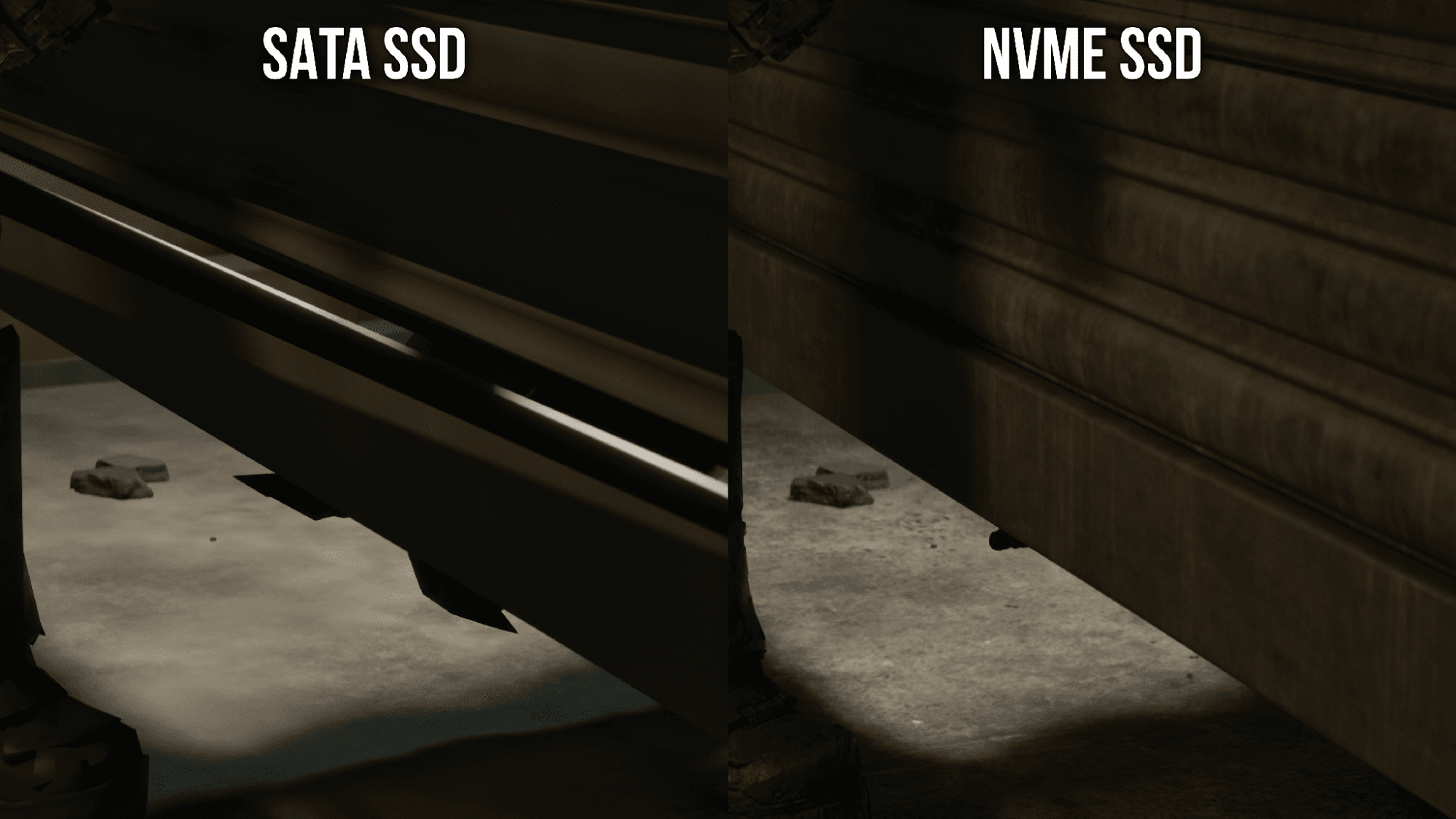
Testing indicates that the game requires an average throughput of over 1 GB/s from the SSD, significantly higher than most modern titles. During peak moments, this figure reaches up to 3.7 GB/s. Consequently, when installed on an NVMe SSD, the game consumes approximately 2GB less RAM compared to installations on SATA SSDs or HDDs, providing the system with much-needed breathing room.
Why this matters for PC gamers
Our tests confirm that installing the game on a SATA SSD or slower media leads to inevitable visual degradation. Textures load slowly, and lighting and shadow effects often appear with delays, compromising the game's immersion. Furthermore, on systems with 16GB of RAM, utilizing an NVMe drive directly improves 1% lows—the minimum frame rate dips—making the gameplay significantly more stable and fluid.
While Windows already features virtual memory, The Coalition’s approach is far more sophisticated. The game pre-determines which data is critical, swapping only that specific information between the drive and memory to prevent stuttering.
Conclusion for users
If you plan to play Gears of War: E-Day, it is essential to install the game on a fast NVMe SSD rather than an older SATA drive. With RAM prices remaining high and many players still relying on 16GB systems, we expect to see other developers adopt similar technologies. This represents a way for developers to maintain high-end visuals even on mid-range hardware.