Facebook's New Restrictions Limit Link Sharing for Organizations
New subscription tiers are forcing non-profits and public agencies to pay for basic communication tools.
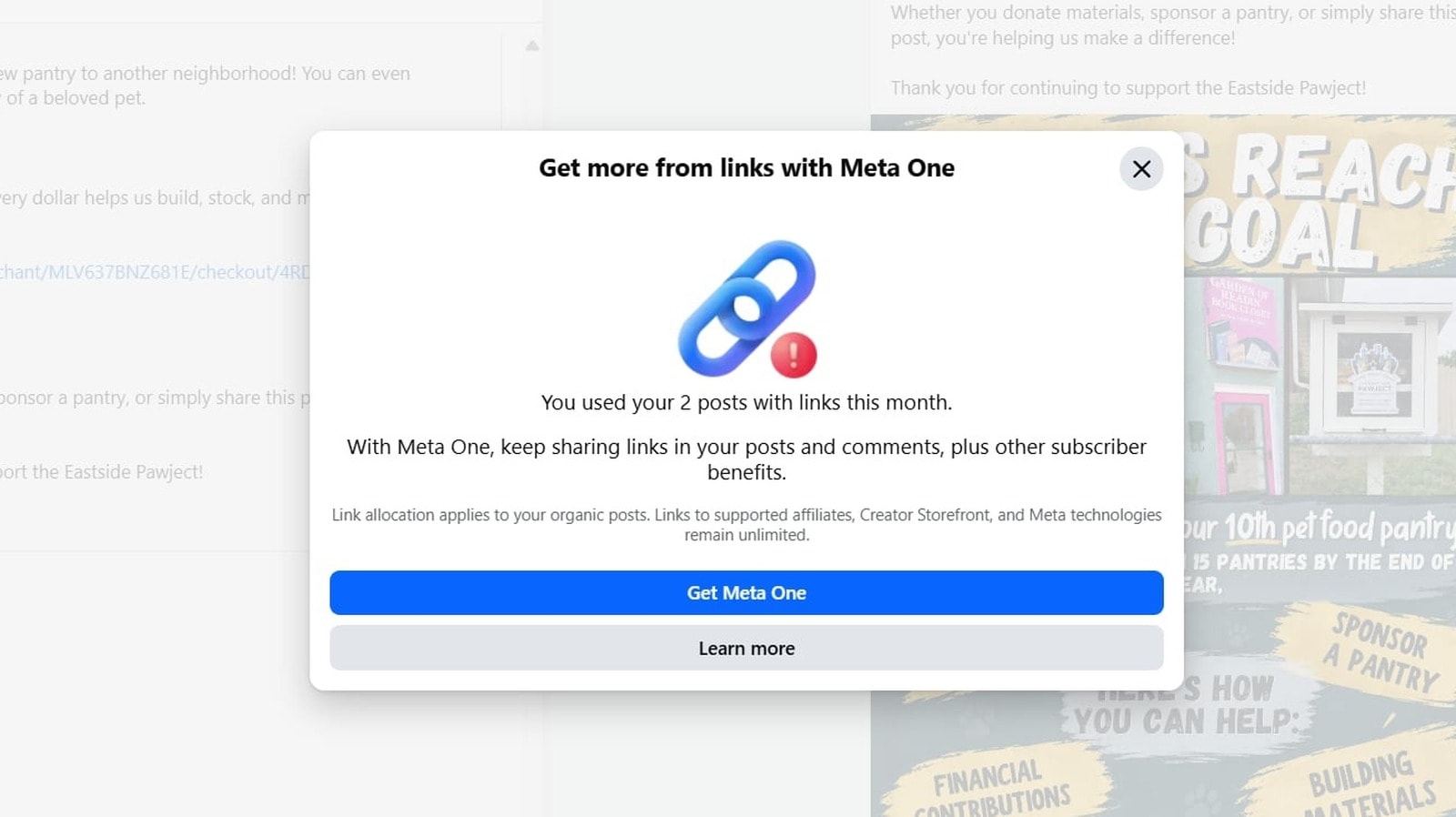
Facebook is continuing to test a new subscription model that restricts the ability of users to post links on the platform. Under the system introduced by Meta, free account holders are limited to sharing only two links per month. To remove these restrictions, the company is offering the Meta One paid subscription, which ranges in price from $50 to $500 per month.
Although Meta officially stated that these restrictions would not apply to government agencies and non-profit organisations, the reality has proven different. Numerous such institutions have already found themselves in a position where the platform prevents them from adding links. This is particularly difficult for organisations that rely on the social network to inform the public and conduct charitable work.
Challenges for the Public Sector and Non-Profits
Municipalities in American cities and small charitable foundations are already voicing their protests. For example, a verified page for a city library recently hit its link-sharing limit. Municipal representatives state that a large part of their work involves directing users to official information on websites. Due to the new rules, they have had to seek alternative ways to share links, such as posting them in the comments, as adding links directly to posts is now impossible without payment.
Small non-governmental organisations are facing similar issues. For those that raise only a few hundred dollars a month, a $150 subscription fee for the right to share 20 links is an unsustainable financial burden. Representatives note that the social network is their primary channel for communicating with their audience, and limiting this capability directly hinders their activities.
Meta's New Strategy and Uncertain Future
Meta's position on this matter remains unclear. Company representatives state that they are continuing to refine the experience based on feedback, though they have not specifically explained why organisations that should be exempt are being affected. Many experts and users view this move not only as an attempt to promote the AI-focused Meta One service but also as a way for the company to artificially increase its revenue.
At this stage, it is unclear whether Meta will lift these restrictions in the future. Some organisations have noticed that the limitations were removed after a certain period, yet they received no explanation from the company. For users in Georgia who actively use Facebook for business and public activities, these changes serve as a significant signal. If this practice is implemented on a global scale, it could become a major barrier for the non-profit sector, which relies heavily on the free tools provided by social networks.