European Space Rider Prototype Crashes During Test Flight
The European Space Agency confirms that an independent investigation is underway following the loss of the test model.
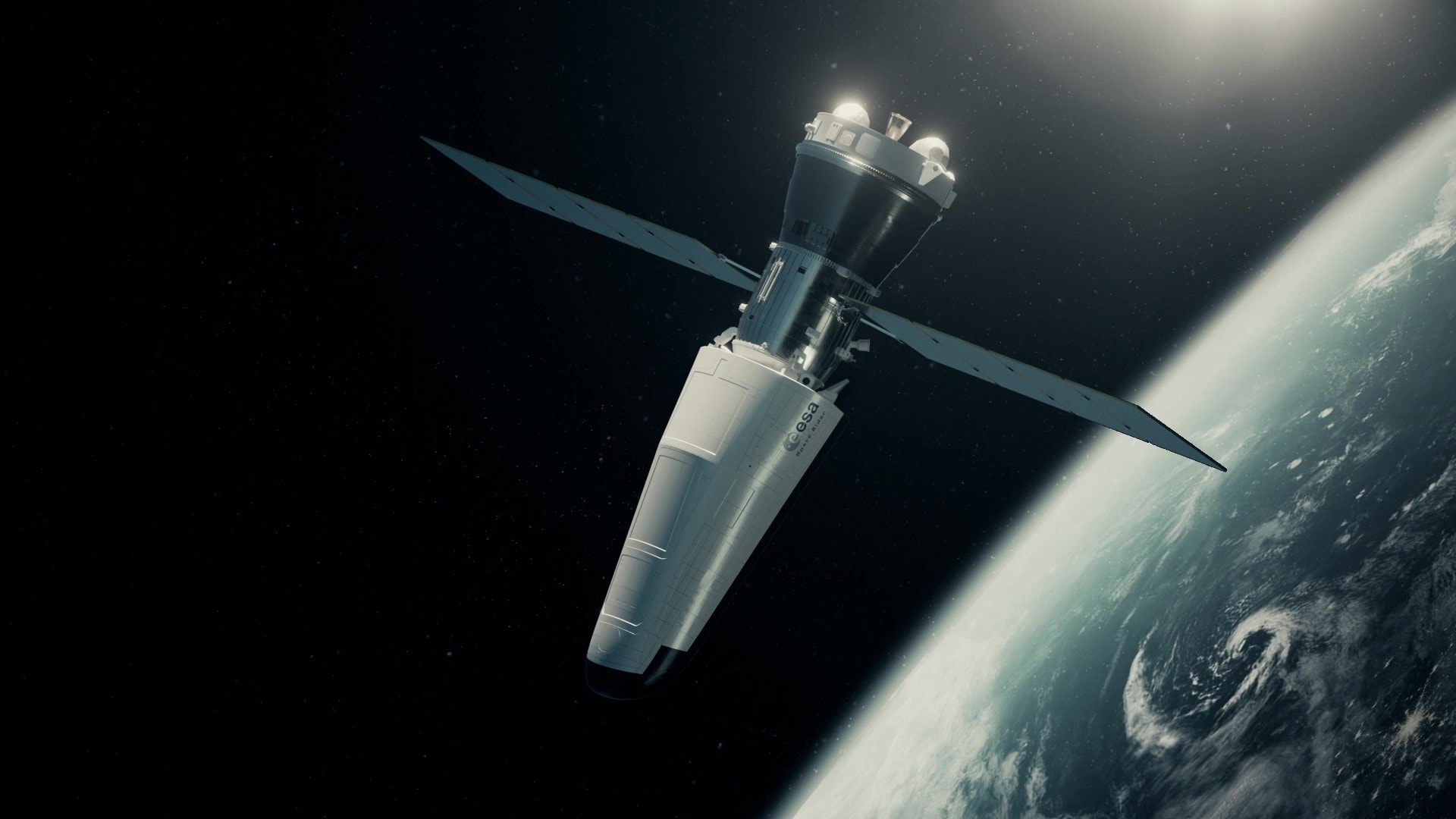
What happened during the test flight
The European Space Agency (ESA) has faced a setback in its ambitious Space Rider project following a failed drop test. On October 6, a full-scale model of the spacecraft was released from a helicopter at an altitude of approximately 3 kilometres over a military range on the Italian island of Sardinia. The objective was to demonstrate the craft’s landing system, specifically the performance of its steerable parachute, or parafoil.
According to official information from the ESA, the initial drogue parachute deployed as planned. However, the main parafoil detached from the craft during the deployment sequence. As a result, the vehicle could not decelerate and impacted the ground. Agency representatives confirmed that an independent investigation into the cause of the incident is underway, and all fragments of the crashed model have been recovered.
What is Space Rider and why is it important
Space Rider is Europe’s first reusable, unmanned orbital spacecraft. Its primary mission is to carry scientific experiments into orbit for up to two months before returning to Earth. Unlike other similar craft, Space Rider does not rely on traditional parachutes for ocean or desert landings. Its unique wingless design, based on a 'lifting body' principle, allows it to perform a controlled flight using a parafoil to land precisely on a runway.
This technology is critical for the craft's reusability. Although the October test was unsuccessful, ESA Director of Human and Robotic Exploration Geraldine Naja stated that the incident will not impact the project's overall schedule. She explained that remaining qualification tests are proceeding as planned and that the event does not represent a critical obstacle to the program's development.
Future outlook for the project
It is important to note that the destroyed model was a full-scale mock-up equipped with autonomous navigation and control systems, rather than a flight-ready spacecraft. Previously, as part of a campaign that began in 2025, the ESA successfully tested the craft's thermal protection systems in a plasma wind tunnel, where materials were subjected to temperatures of up to 1,600 degrees Celsius.
This was the first drop test following an unsuccessful attempt in May, which was cancelled due to technical issues. Despite the recent incident, the ESA still aims to launch the first orbital mission of the Space Rider before the end of the decade. For the European space programme, this vehicle represents a significant step toward establishing independent and cost-effective space logistics, which will significantly reduce the costs of future commercial and scientific missions.