Energy Efficiency After Death: Harnessing Heat from Crematoriums
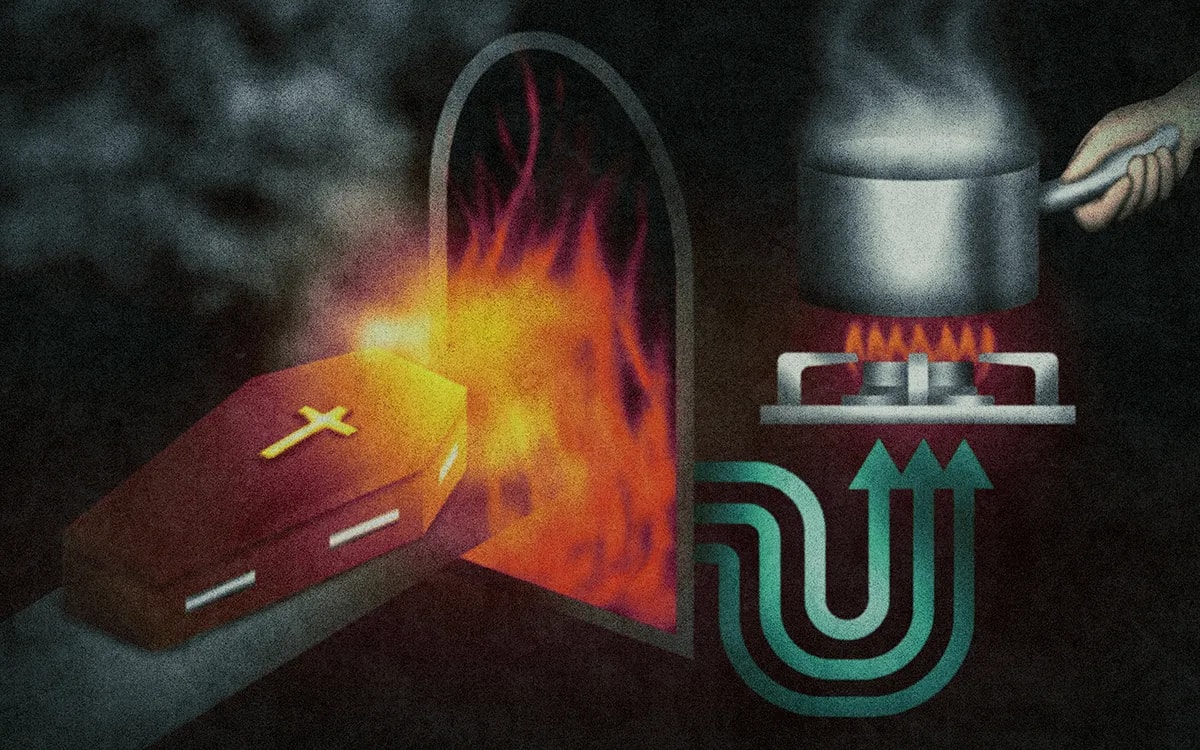
Modern technology is offering new and unconventional ways to save energy. In recent years, several European countries have begun capturing excess heat from crematoriums to warm public buildings and residential homes. While the concept initially sparked emotional debate, experts consider it one of the most rational solutions from an ecological perspective.
A Practical Solution from the UK
The first project of this kind was announced in 2011 in the English town of Redditch. Local authorities decided to use heat emitted from crematorium furnaces to warm a nearby swimming pool. The project immediately drew sharp public criticism and media attention, yet the results after implementation were impressive: the town saved tens of thousands of pounds in fuel costs. Today, a similar approach is being implemented in the Scottish city of Aberdeen, where heat from a crematorium will be connected to a new school's heating system.
The Finnish Model and Heat Distribution
In the Finnish city of Kangasala, plans are underway to open a fully electric crematorium by 2028 that will connect to the city's district heating network. This system will supply hot water to more than 6,500 households. According to Finnish specialists, this is a practical step toward reducing dependence on natural gas. The system is so efficient that a small portion of the heat in citizens' homes could eventually be the result of this process.
How the Technology Works
The process relies on heat exchangers that collect exhaust gases from furnaces. These gases are already filtered to remove harmful substances before being released into the atmosphere, making the additional recovery of heat a logical step. A funeral complex in Sainte-Thérèse, Canada, even uses this technology to melt snow on sidewalks during winter, ensuring safety in icy conditions.
Why It Matters
Although heat recovered from crematoriums covers only a small fraction of a country's total energy consumption—approximately 1%—experts emphasize that decarbonizing heating systems is a complex challenge, and any alternative source is valuable. Many people view this as a way to reduce humanity's negative impact on the environment.
While such unconventional forms of energy efficiency are not yet under consideration in Georgia, European experience clearly demonstrates that technological progress and ecological responsibility sometimes intersect in the most unexpected places.