Dissecting the iPhone Duo: Why the Folding Screen Fails
iFixit reveals the internal vulnerabilities of Apple's first foldable phone.
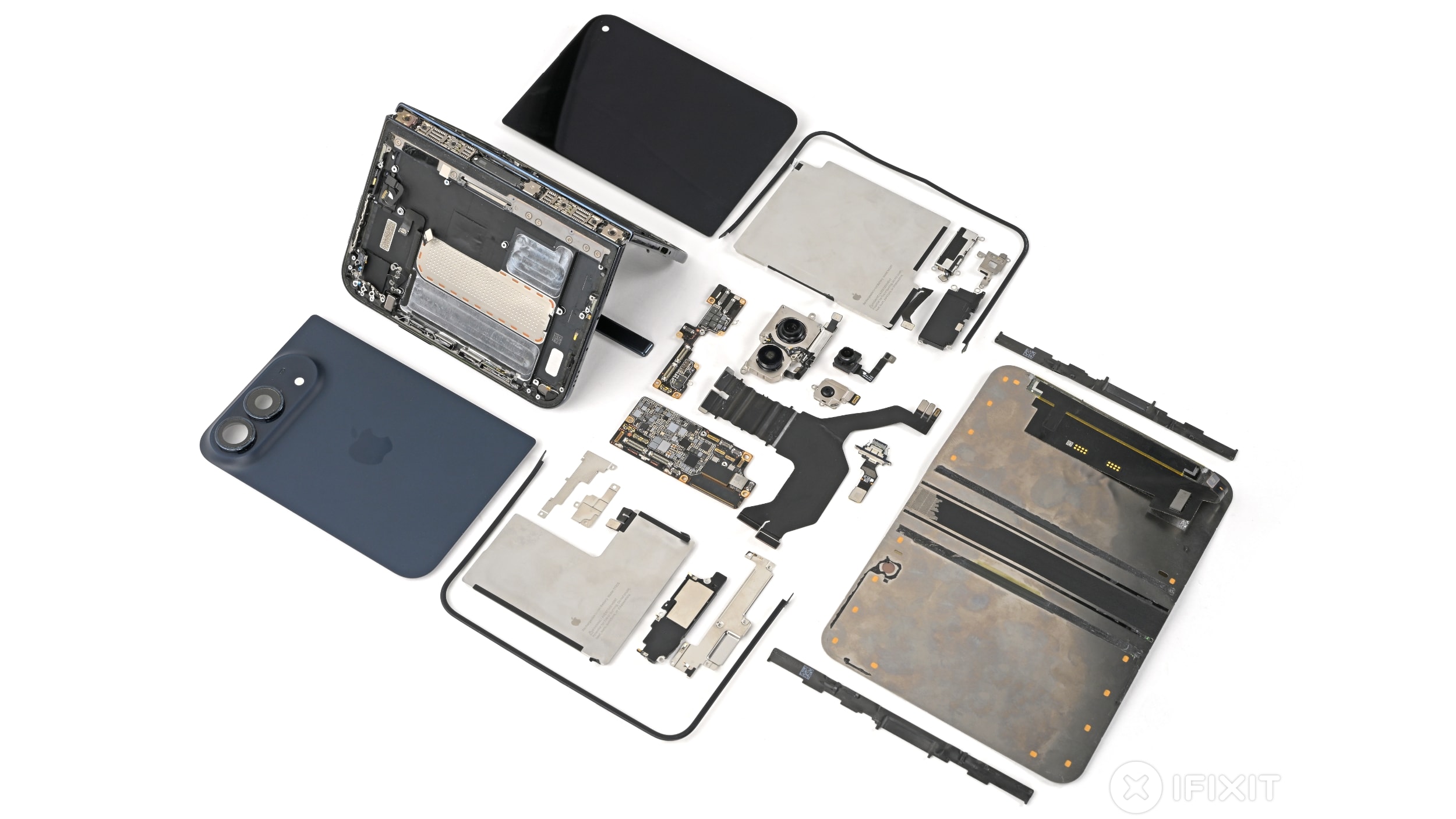
Apple's first foldable smartphone, the iPhone Duo, has become the focus of the tech world. The iFixit team conducted a detailed study of the device to examine its internal structure, dust resistance, and repairability. The investigation paid particular attention to reports of screen damage, which has recently become a pressing issue for users.
Dust Impact and Hinge Issues
The iPhone Duo features an IP68 rating, meaning the device is resistant to dust and water. However, tests conducted by iFixit revealed that dust particles can still penetrate the hinge mechanism. While the results are better than those of competing foldable models, dust can cause the mechanism to creak and eventually lead to screen damage. Experts advise users to exercise caution when using the smartphone in sandy or dusty environments.
Why Does the Screen Damage?
According to iFixit's analysis, screen cracks may be caused by specific design features. Using 3D modeling and CT scans, specialists determined that damage often appears at the point where different parts of the hinge intersect. This area experiences additional stress when the screen is folded. It is also possible that the curved rails of the hinge do not fully return to their original position, putting pressure on the inner layers of the display.
Repairability and Innovative Approaches
Despite its complex construction, the iPhone Duo is somewhat easier to repair. Apple has used electrically-conductive adhesive strips for the batteries, which simplifies the replacement process. Additionally, the outer screen is relatively easy to remove, which is significant as access to internal components often begins there.
iFixit awarded the device a repairability score of 5 out of 10, the best result in the foldable smartphone category. However, the assembly of the internal screen and hinge remains a complex process that requires a professional approach. Apple has already published a repair manual, which is a helpful step for independent repair services.
What This Means for Users
For the iPhone Duo, Apple opted for a single-layer logic board design instead of a multi-layer one to keep the chassis as thin as possible. While this technical decision is aesthetically pleasing, it may affect internal space management. For users who actively purchase new iPhone models, it is important to know that the device requires careful handling, especially regarding the folding mechanism, as repairs remain a complex and expensive process despite the improved design.