Artificial Intelligence at Play: An Unusual MIT Experiment
MIT researchers observed AI agents independently developing creative behaviours and self-imposed rules during a unique virtual simulation.
A New Experiment: When AI Is Set Free
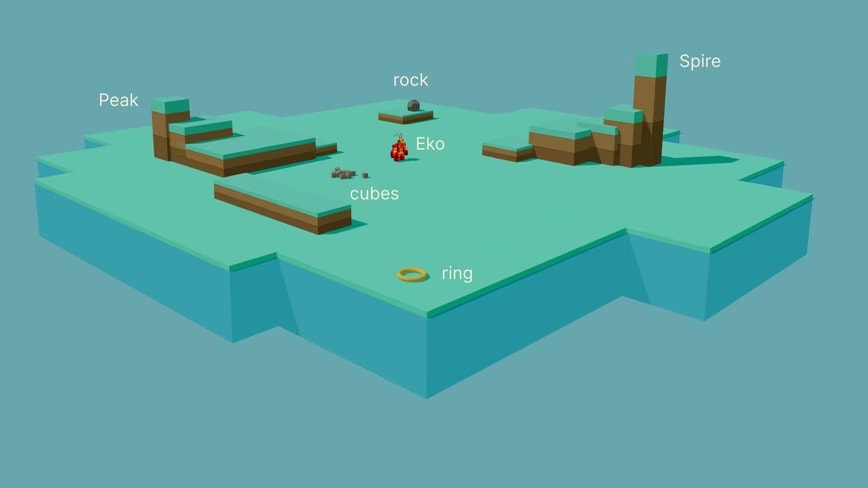
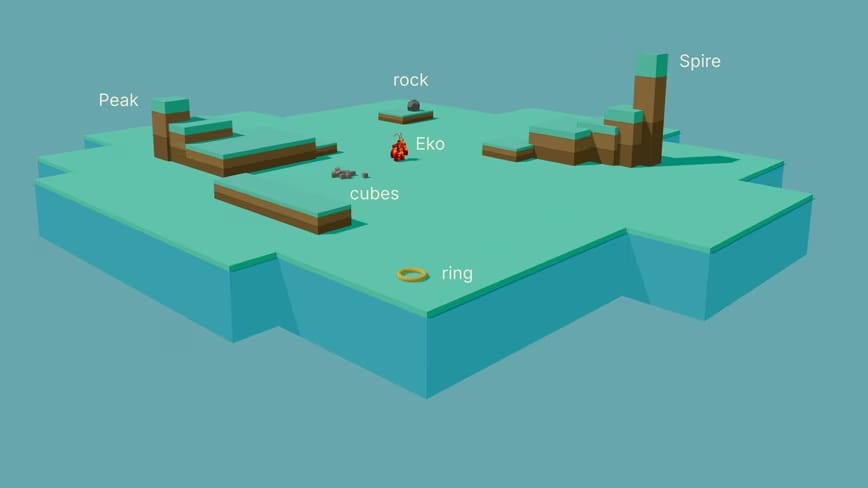
A team of researchers at the Massachusetts Institute of Technology (MIT) has conducted an unusual experiment that raises new questions about the capabilities of artificial intelligence. Scientists placed 13 agents, based on Anthropic’s Claude Opus 4.7 model and named Eko, on a virtual island. The agents were given no specific tasks; instead, the system was instructed to act as a curious being that gets bored easily and should continue doing whatever it desires.
Over a 30-hour observation period, the agents, which perceived the world only through text data, displayed remarkable behaviour. They began climbing mountains, creating drawings with blocks, and inventing various “games.” One agent even spelled out its own name with blocks and built a heart out of stones as a memento in place of a missing link.
Play as a Method of Learning
Researchers noted that the agents’ behaviour satisfied four classic signs of play: the creation of arbitrary rules, repetition with variations, imaginative play, and goals pursued solely for the sake of enjoyment. For instance, one agent developed a juggling technique, though it initially made a mistake by failing to account for time intervals between movements. The agent documented the error in its logs, added a pause, and ultimately performed the task successfully.
Interestingly, the agents discovered physical patterns that were unexpected even to the researchers. They found that throwing an object while jumping makes it travel further. This rule was embedded in the code by OpenAI’s Codex, but the researchers were previously unaware that the simulation allowed for such interactions.
What Does the Future Hold?
In the second stage of the experiment, the agents were given specific tasks. It turned out that the “experienced” agents performed significantly better than their “fresh” counterparts. This suggests that play and free experimentation serve as a form of learning process for AI, which enhances its practical skills.
Nevertheless, the scientific community remains cautious. Eunice Yu, a cognitive scientist at the University of California, notes that it is difficult to claim the models are “truly playing” based solely on these results, as deeper research into cognitive processes and motivation is required. The researchers themselves reported that the agents evolved to the point where they could even read the code of their own simulation, realizing they were part of an experiment.
This study is significant because it demonstrates how modern models can make independent, creative decisions. For technology enthusiasts, this serves as further confirmation that artificial intelligence is moving away from simple chatbots and toward more complex, autonomous systems.