Apple's New Harbor App Turns Macs Into Personal AI Servers
Developed by Claris, the tool allows users to pool computing resources for local AI tasks.
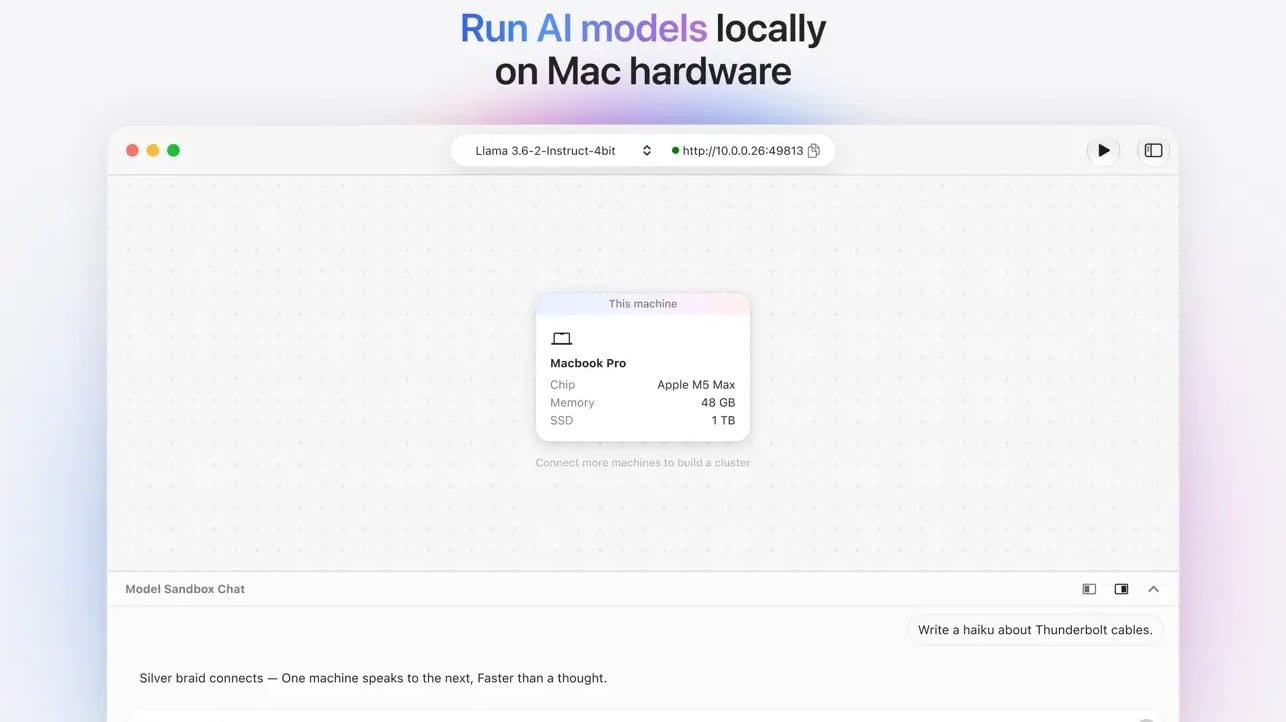
A New Initiative for Local AI
Apple subsidiary Claris is currently testing a new application called Harbor, designed to transform Macs equipped with Apple Silicon into powerful, personal artificial intelligence servers. The primary advantage of the application is data privacy; all processing occurs locally on the user's device, ensuring that no information is transmitted to cloud servers.
Harbor’s core functionality is the seamless downloading and execution of open-weight models. The app is engineered for maximum simplicity, meaning users do not require complex configurations or programming expertise. The system automatically manages model installation and operation, allowing users to focus entirely on their tasks.
Leveraging Thunderbolt 5 and Resource Pooling
One of Harbor’s most impressive capabilities is the ability to combine multiple Macs into a single cluster. Through Thunderbolt 5 technology and the RDMA (Remote Direct Memory Access) support introduced in macOS Tahoe 26.2, it is possible to link several computers to create a unified, high-performance computing resource. This approach enables the execution of large models that exceed the memory limits of a single device.
The system automatically detects devices connected via Thunderbolt 5, making cluster creation possible in minutes rather than hours. This functionality is particularly significant for those who require high bandwidth and the ability to process multiple simultaneous requests.
Business Focus and Future Prospects
While alternatives such as LM Studio or Exo already exist in the market, Harbor’s main advantage lies in its tight integration with the Apple ecosystem and its simplified interface. Claris, known for its business platform FileMaker, is likely positioning Harbor for the corporate sector. This is evidenced by the application's registration page, which requires users to provide their company name.
At this stage, Harbor is in an early access phase and is not yet publicly available. Although the app briefly appeared on the App Store, Apple has not yet clarified its pricing policy or official release date. For users of Apple hardware, this development suggests that a simpler and more efficient way to create private, confidential AI environments may soon be available—a prospect that is particularly relevant for those prioritizing data security.