AMD Adds Official Processor Tuning Support for Linux
New kernel patches bring official Ryzen tuning capabilities to the Linux ecosystem
A New Era for Linux Users
For years, Windows users have enjoyed the convenience of Ryzen Master, a tool that allows for easy adjustment of clock speeds and voltage settings via a simple interface. For Linux users, this process has historically been cumbersome, often requiring deep dives into BIOS or UEFI settings. AMD has now taken a significant step forward by officially releasing patches for the Linux kernel that add support for the AMD Overclocking Driver (AOD).
This new driver provides a direct channel to AMD platform parameters. Instead of developers having to navigate closed-source firmware or rely on unstable ACPI alternatives, the new system driver provides a standard sysfs interface. This ensures that processor management becomes both more transparent and stable.
What Does the New Driver Offer?
In its initial phase, the driver grants users access to critical parameters, such as the dynamic toggling of Simultaneous Multithreading (SMT). Previously, this required a system reboot and specific configuration changes, but the process is now far more flexible. Additionally, the driver enables real-time monitoring of RAM frequencies and provides primary power control.
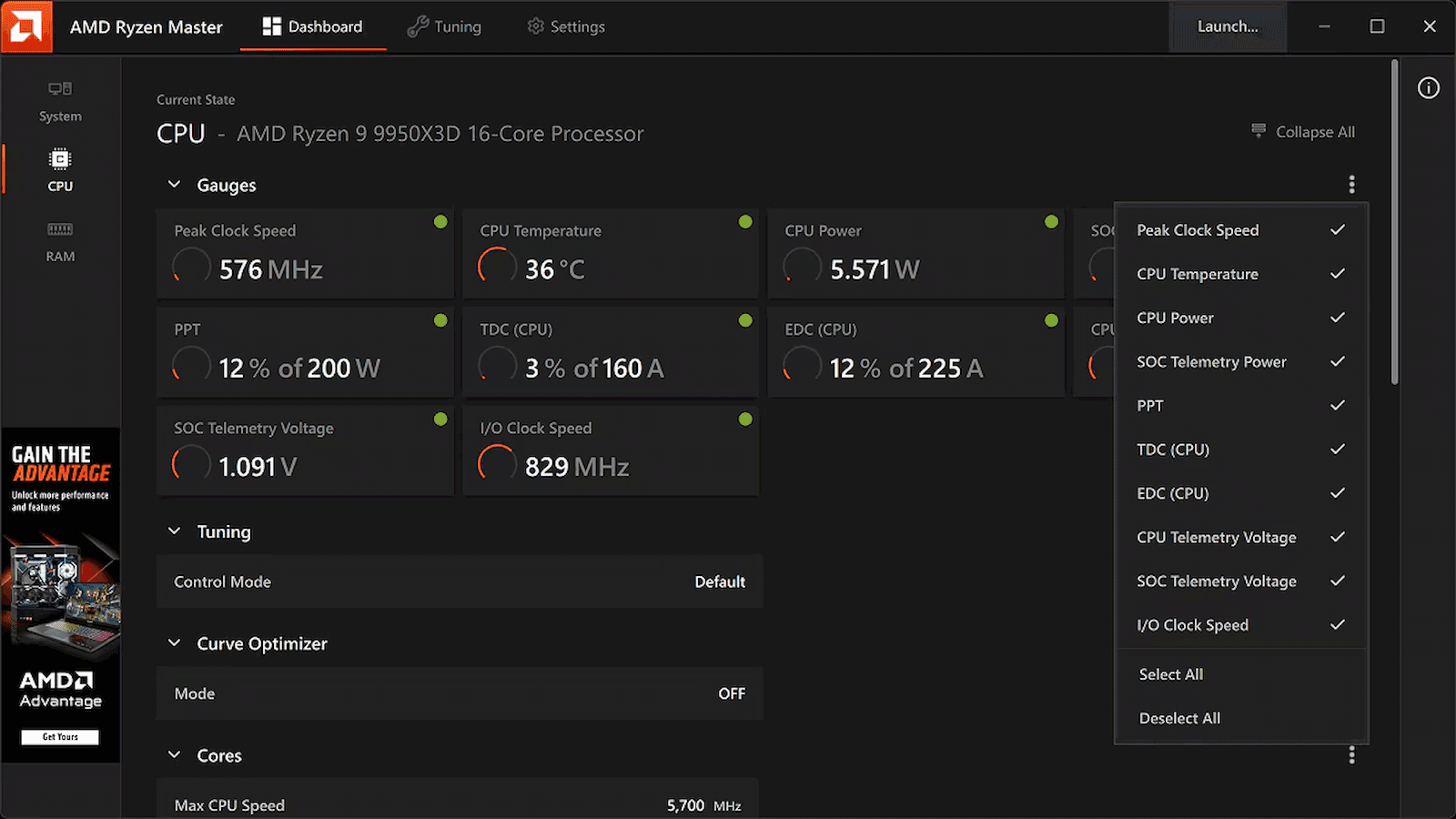
It is important to note that AMD does not plan to release a graphical interface similar to Ryzen Master for Linux. The company is following its traditional strategy of building the necessary kernel-level infrastructure while leaving the user-facing interface to the community. This approach aligns perfectly with the philosophy of Linux.
What This Means for Users
Although AMD will not create a dedicated application, the structure provided by the driver allows popular open-source programs like CoreCtrl to easily integrate Ryzen tuning features. Developers can now incorporate these data points into monitoring systems or even specialized desktop environment extensions.
Currently, the patches are undergoing a review process, meaning they will be reflected in the official kernel in the near future. This is a vital step for enthusiasts who value free software and wish to extract maximum performance from their hardware. For Linux users globally, including those in Georgia who frequently utilize AMD platforms, this news signifies greater control and improved integration with their preferred operating system.