Algae-Powered Robots: A Breakthrough in Soft Robotics
Dutch researchers develop a soft robotic arm powered by photosynthesis.
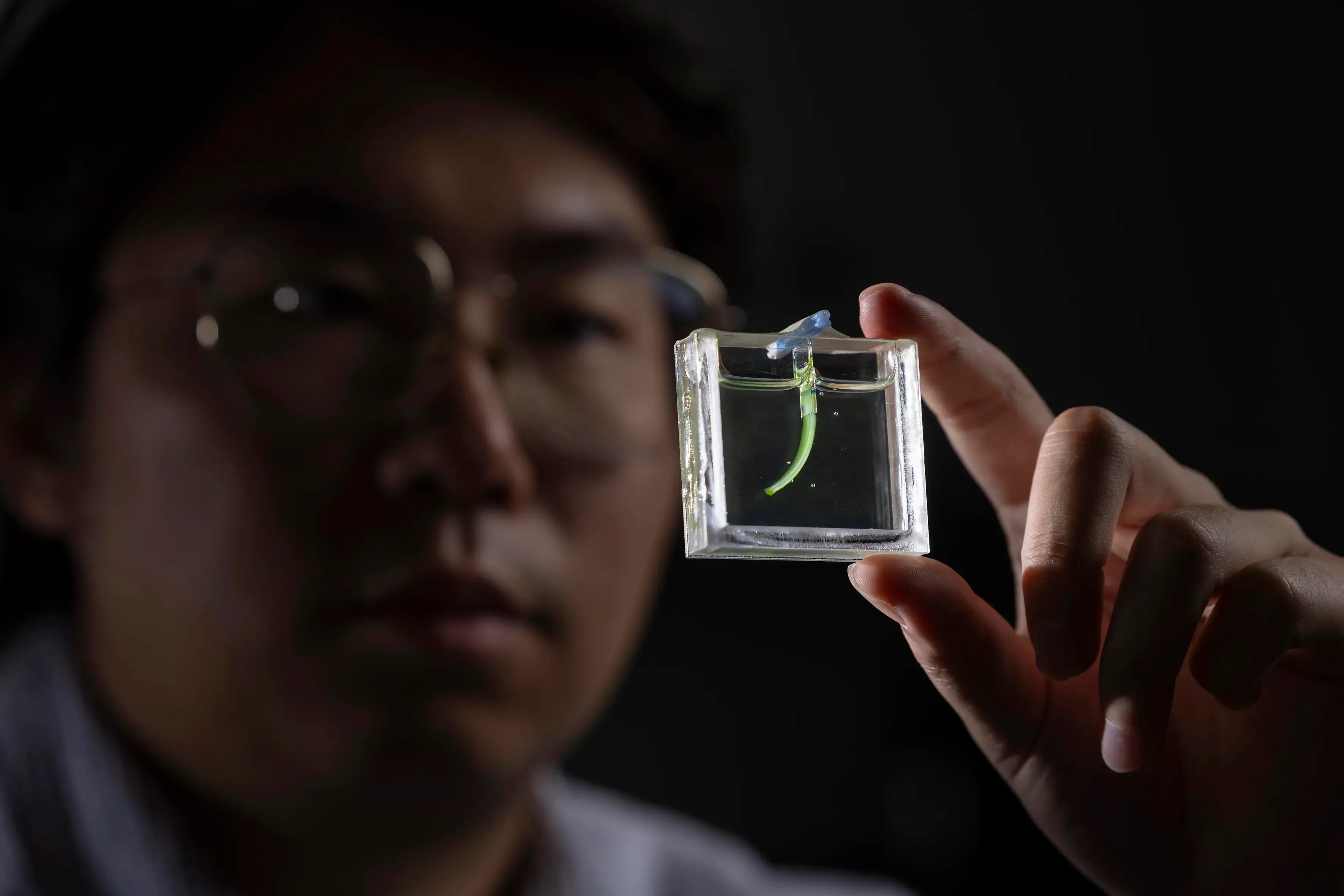
Modern robotics is increasingly moving away from traditional, rigid metal structures. Researchers at the Delft University of Technology have unveiled a soft robotic arm that operates without the need for electricity or complex mechanical components. Instead, the device is coated with living algae, which generate movement when exposed to light. ## How the 'living' robot works The miniature robot measures approximately two centimetres in length, with a thickness comparable to a bank card. It consists of two layers of hydrogel populated by algae. When light hits the surface, the algae begin photosynthesis, which alters the pH level of the environment. This chemical change causes the hydrogel layer to expand, allowing the arm to bend. In the dark, as the algae return to the respiration process, the pH level becomes more acidic and the hydrogel returns to its original state, completing the robot's movement. ## Advantages and practical applications The researchers have already tested the technology in the form of a four-fingered gripper, which successfully lifted a lightweight metal sphere. Although the movement is relatively slow—taking several hours for a full bend—the system holds significant potential in fields where minimal environmental impact is required. Because algae are self-sustaining organisms, these robots do not require external power sources or complex electronics. Furthermore, the algae do not require genetic modification, which eliminates risks associated with biosafety. In the future, such technology could be utilised in autonomous agricultural devices, underwater robotics, or for fluid management in laboratory micro-devices. This project represents another step toward integrating living materials and creating environmentally friendly technologies that adapt to their surroundings.