AI Data Centres: The Future of Infrastructure Production
Runware aims to make AI infrastructure deployment as scalable as automotive manufacturing.
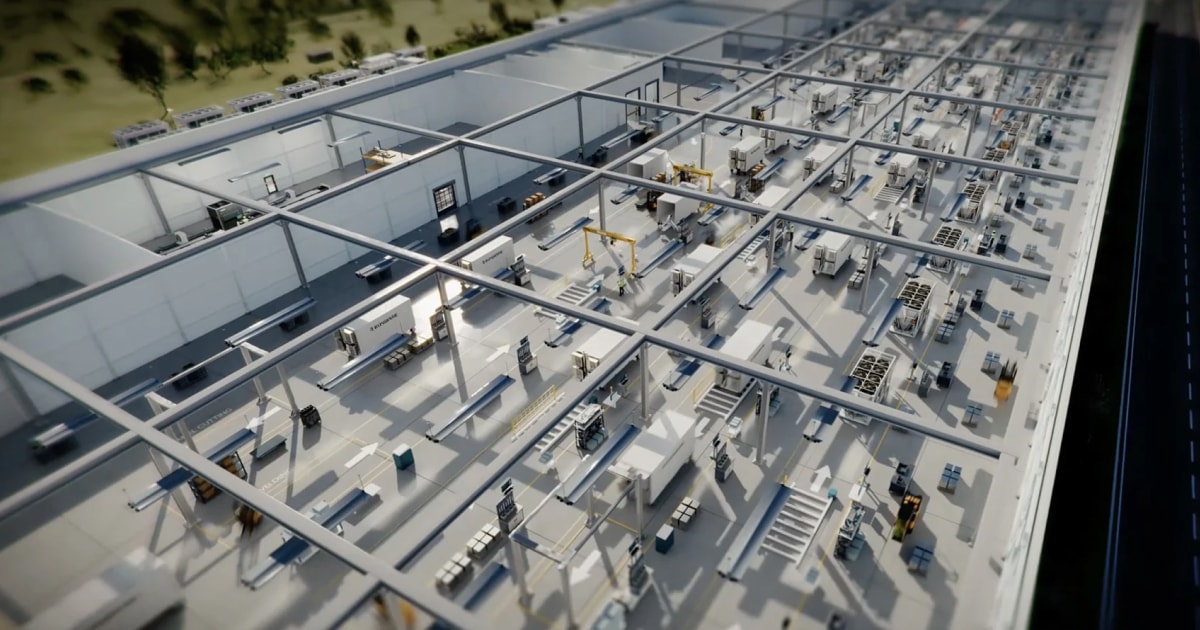
Assembly-Line Data Centres
As the demand for artificial intelligence continues to surge, the need for data centre capacity has reached a critical point. Startup Runware is addressing this challenge with an innovative, factory-based approach. The company intends to manufacture modular data centre units, known as Sonic Inference Pods, using an assembly-line process similar to the automotive industry.
Runware’s vision is straightforward: instead of lengthy on-site construction, clients receive pre-assembled data centre modules that can be installed in just 48 hours. Flaviu Radulescu, the company’s co-founder and CEO, stated that the goal is to reach a production capacity of 30 megawatts per day by 2028, equating to nearly 1 gigawatt per month. This figure is significant, as it matches the total annual capacity currently planned across the United States.
Runware currently operates one factory, with a second facility dedicated to mass production scheduled to launch early next year. The company claims its modular design allows for flexible adaptation to client requirements and the latest graphics processing units (GPUs).
Challenges and Ambitions
Despite these ambitious plans, scaling production remains risky. Tech history is filled with companies that struggled to optimise manufacturing processes. However, Runware’s leadership believes their cost structure is distinct. The company has already secured $50 million in investment and has recruited managers with automotive industry experience to ensure maximum production efficiency.
Runware is also addressing environmental criticisms surrounding data centres. Their modules utilise closed-loop liquid cooling systems, which significantly reduce water consumption. Additionally, the systems are designed to operate silently and prioritise the use of renewable energy.
Market Impact
Currently, building data centres takes years, which slows the pace of AI development. Runware’s model, which introduces a modular standard, could prove transformative for the industry. If the company succeeds in hitting its production targets, clients could plan their infrastructure in months rather than years.
Although Runware is still in its growth phase, it has already secured $1 billion in pre-orders. Looking ahead, the company plans to expand production across the United States and other regions, a move expected to significantly increase the global availability of AI infrastructure.