A Historic SpaceX Milestone: The Unprecedented Return of Starship
SpaceX has successfully returned its Starship rocket to Earth, catching it mid-air with the launch tower. This achievement marks a turning point for spaceflight.
A New Era in the Space Industry
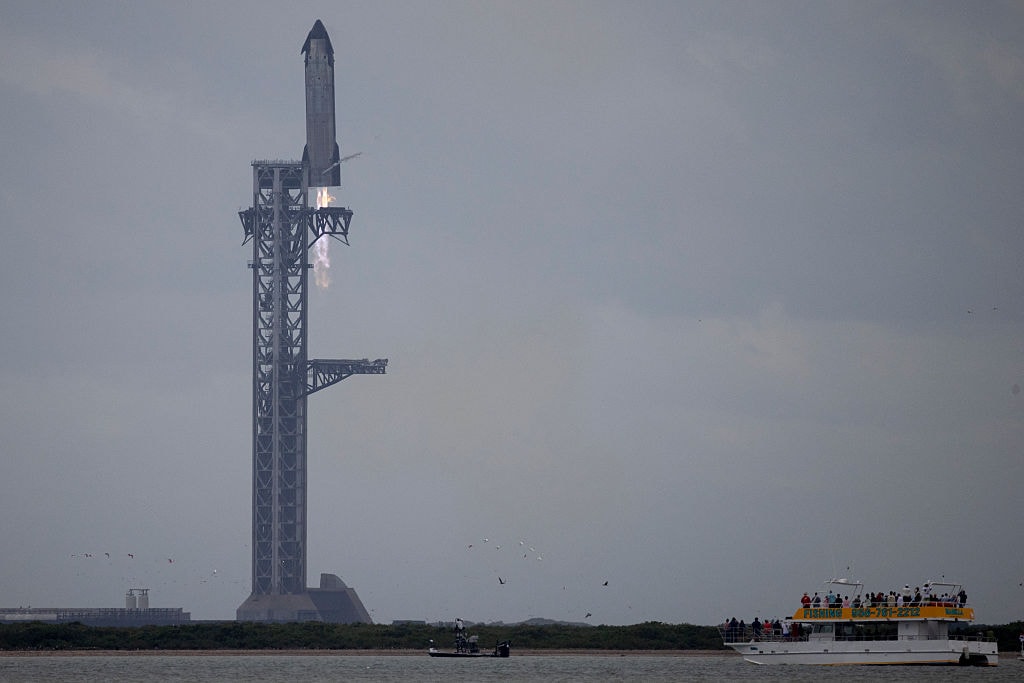
At the Starbase facility in Texas, SpaceX has achieved another major technological breakthrough. The company successfully returned the Starship upper stage to Earth, where it was caught in mid-air by a specialized launch tower. While the process resembles a scene from a science fiction film, it represents the beginning of a revolutionary optimization in space travel.
After orbiting the Earth, the rocket re-entered the atmosphere in a horizontal orientation. During the landing sequence, three Raptor engines fired, maneuvering the craft into a vertical position for a slow, precise descent toward the tower's arms. The tower secured the rocket by its two small protrusions, confirming a safe and successful return.
Why This Matters
Humanity has attempted to reuse spacecraft in the past. For instance, NASA’s Space Shuttle program in the 1970s aimed for reusability, but the reality fell short of expectations. The shuttles were expensive, and their heat shields required complex, time-consuming repairs after every flight. Consequently, the cost of space missions proved significantly higher than initially projected.
SpaceX’s approach is fundamentally different. The company aims for mass production and rapid, frequent reuse of its rockets. Currently, a Starship stage can be assembled at the Starbase factory in three weeks, though the company’s plans are far more ambitious: producing one ship every three days. While Elon Musk’s vision may have seemed unrealistic to many five years ago, it now appears entirely achievable.
A Future That Becomes Routine
SpaceX’s goal is to reach hundreds, and eventually thousands, of flights per year. The successful catch performed on Saturday serves as a "proof of concept," demonstrating that safely returning a massive spacecraft is possible. Naturally, many technical challenges remain, including perfecting the heat shield, which continues to be the most difficult aspect of the mission.
However, as the history of technological progress shows, what seems like a miracle or an unattainable feat today eventually becomes a daily routine. SpaceX has already proven its ability to land rockets on floating platforms and transport astronauts safely. Now, the company is attempting to change humanity’s relationship with space forever. This will have a profound impact on Earth, as the reduced cost and increased speed of space technology will open new possibilities for scientific research and satellite communications.